Why roll format is part of application readiness
Most label conversations start with artwork, substrate and colour. That matters, but the last step before the roll leaves your shop is just as important. If the finished roll does not suit the applicator, the operator ends up slowing the line, trimming rolls by hand or stopping for changeovers that should not be happening.
For short-run work in Johannesburg, Pretoria or the East Rand, this can be the difference between a neat delivery and a return call the next morning. A bakery, chemical packer or contract bottler does not want to hear that the labels are correct but the rolls are not loading properly. They want labels that run, count and dispense the way the line expects.
Application readiness is simply the habit of preparing the roll for the real job, not only for the printer. That means checking dimensions, core fit, rewind direction, spacing and the way the labels will behave in heat, dust or humidity. On some sites in Durban or Maputo the air is damp enough to affect release, while a warehouse in Midrand may deal more with static and dry winter conditions.
The final roll details that matter most
When a customer says a label roll is wrong, the problem is often one small detail that was missed during setup. A roll that looks neat on the packing bench may still be unsuitable for a hand applicator or a high-speed line. The key is to match the roll to the machine, the operator and the product pack size.
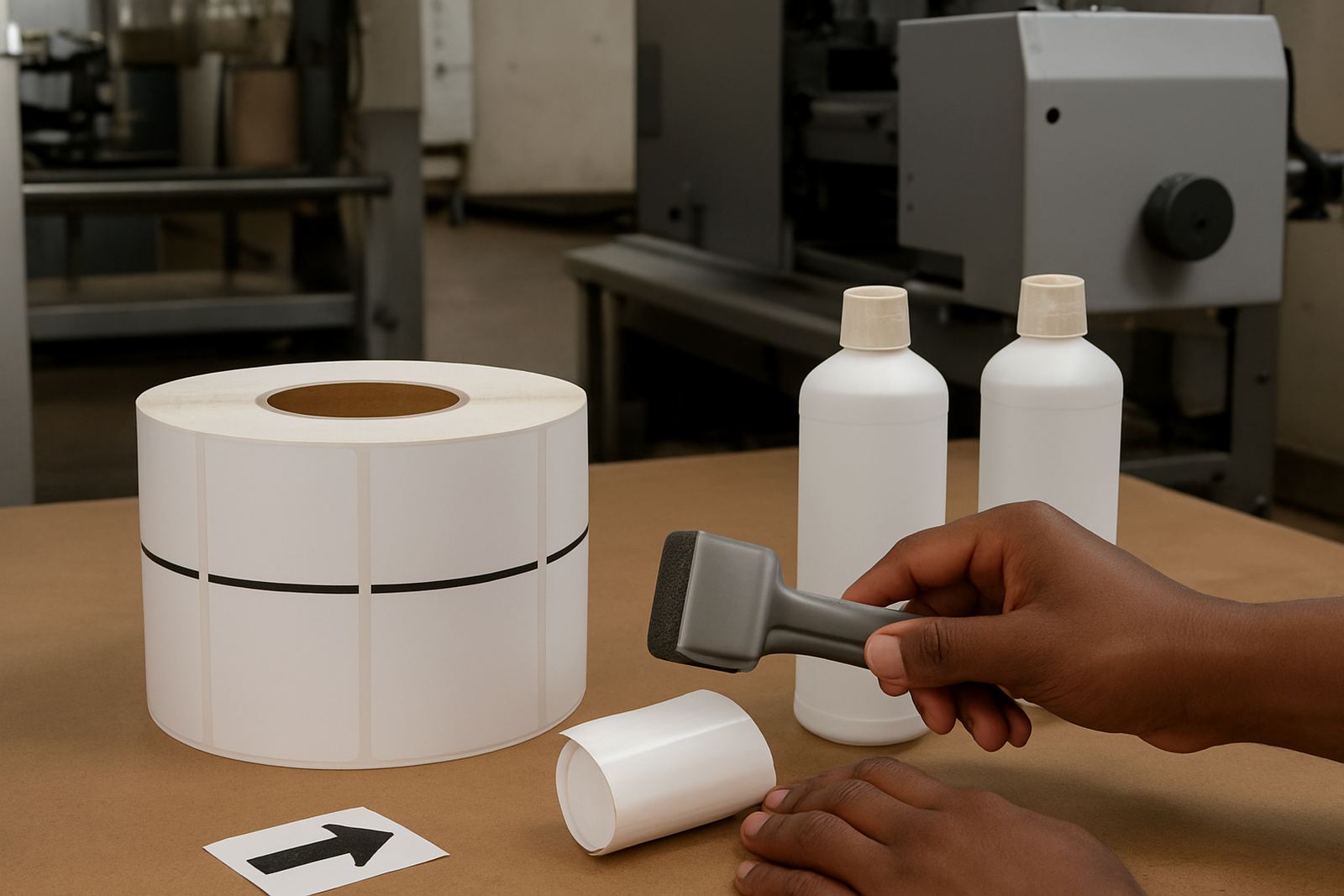
- Core size: 25 mm, 40 mm or 76 mm cores must match the holder on the applicator.
- Roll diameter: the outside size must fit the machine’s spindle and not foul the guides.
- Web width: labels and backing should track cleanly without wandering.
- Gap and sensing marks: the line needs consistent spacing to read each label correctly.
- Winding direction: inside or outside wound rolls affect how the label peels off.
- Labels per roll: the count should suit the shift length and reduce stoppages.
In many cases the customer is not asking for a design change, they are asking for a format change. That is an important difference. A 100 mm x 50 mm label may be perfect on paper but if the roll is too large for the applicator head, the job still fails at the line.
How to match the roll to the packing line
The safest way to prepare for application is to start with the machine. Check the label dispenser or printer-applicator and confirm the core size, maximum roll diameter and rewind style. Then look at the pack line speed and the product shape. A flat carton, a round bottle and a chilled tray all ask different things from the label.
A packing line in Midrand doing daily dispatch for Gauteng wholesalers may need quick roll changes and easy loading for different SKUs. A site in Pretoria South may only apply a few hundred rolls a day, but if the operator has to stop and rethread every time, labour cost goes up fast. The format must suit the workflow, not just the print file.
Good application readiness also includes the environment. If the labels will go into cold rooms, check adhesive performance at low temperature. If the line is in a dusty store room, keep the outer roll clean and wrapped until use. Coastal humidity can soften backing and make the edge curl if rolls are left open too long.
- Ask what machine the customer uses before deciding the roll length.
- Confirm whether the roll feeds from the top, bottom, left or right.
- Check if the labels must stop exactly over a sensor or registration mark.
- Keep one test roll for line checks before bulk supply.
Short-run colour work needs tighter control
Short-run label printing often serves promotions, seasonal packs and smaller customer orders. That means the job may change every few days, and each change brings a new risk if the final roll format is not standardised. A printer operator can spend more time adjusting than printing if every customer gets a different core, roll length or label gap.
In practical terms, tighter control means fewer surprises. Use a simple job sheet that records the final roll width, core size, unwind direction, quantity per roll and any special adhesive note. If the line operator in Sandton or the export customer in Botswana knows what to expect, the roll can go straight to the machine with less checking.
It also helps to plan consumables properly. If the job needs 5 000 labels but the applicator works best with 1 000 labels per roll, do not force a single oversized roll just to save one changeover. A smoother line is usually worth more than a small saving on handling.
A local example from Midrand to the packing floor
A Midrand print shop recently supplied labels for a food packer sending products into supermarkets across Gauteng. The artwork was approved and the colours were right, but the first trial on the customer’s packing line kept jamming. The issue was not the print quality. The roll was wound the wrong way for the applicator and the core size was slightly off.
Once the roll format was corrected the labels fed properly, the operator could work through the shift without repeated stops, and the customer stopped losing time on reloading. That one adjustment saved more than a day of back-and-forth. It also showed why application readiness should be confirmed before dispatch, not after the complaint arrives.
For businesses supplying across Johannesburg, Pretoria, the East Rand and neighbouring countries, this is common. A label that works in one plant may fail in another because the machine setup is different or the packing room has different conditions. The final roll format must be treated as part of the product.
Questions to settle before the roll leaves the shop
Before sending labels out, make sure the customer and your production team have answered the basics. These checks take a few minutes and prevent expensive returns, especially when the order crosses borders or has to clear a tight delivery window.
- What machine will apply the labels?
- What core size and roll diameter does it take?
- Is the customer hand-applying or running a line?
- Will the labels face heat, cold or moisture?
- Do they need one large roll or several smaller rolls?
- Has the first roll been test-fed on site?
If any answer is uncertain, print a small test quantity first and check it on the actual equipment. It is far cheaper to stop a problem at 200 labels than at 20 000. That kind of discipline is what keeps packing teams moving and keeps print suppliers looking reliable.