Why Some Logos Last Years and Others Fade Fast
Uniform branding durability starts with a simple question: where will the garment be worn and how hard will it be used? A receptionist’s shirt in an air conditioned office is in a different class to overalls worn on a loading dock in Midrand, or team shirts washed after every shift on a night crew. The same logo can behave very differently across those settings.
Most short life problems come from a mismatch between the print system and the fabric, or from rushing the curing stage. If the ink, transfer or toner does not bond properly to the fibres, the logo may crack, peel, or lose colour after only a few washes. Heat, UV exposure and repeated stretching all add pressure. In Gauteng, dust and strong sun can be just as hard on garments as the washing machine.
- Frequent washing shortens life faster than occasional wear.
- Stretch fabrics need more flexible branding methods.
- Heat from dryers, presses and ironing can damage some finishes.
- Workwear exposed to oils, cleaners or abrasion needs tougher decoration.
Fabric Choice Matters More Than Most Buyers Think
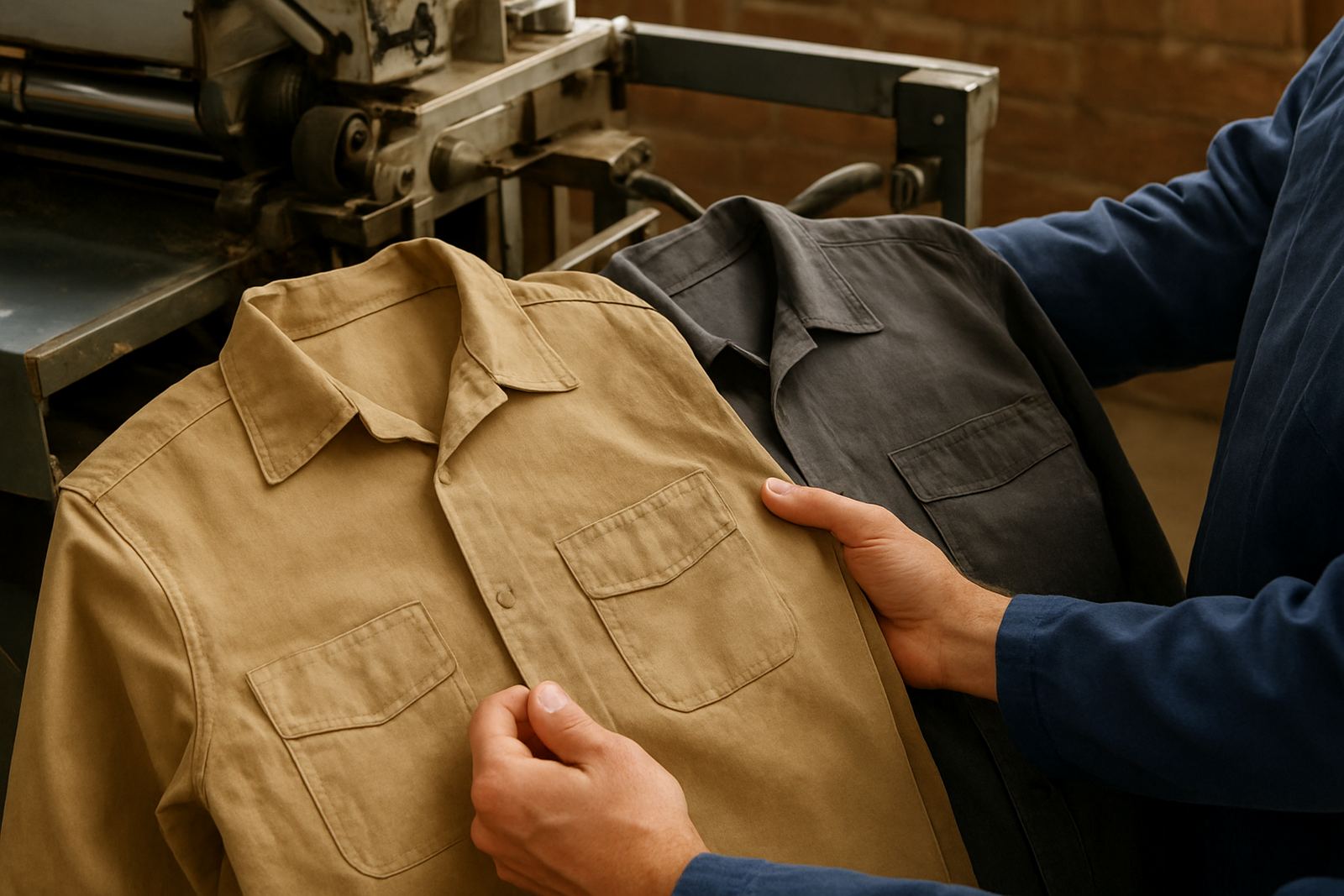
The cloth itself has a big say in how long an applied logo survives. Cotton, polyester, polycotton blends and technical performance fabrics all take branding differently. A dense woven shirt gives a cleaner surface for detailed marks, while textured knitwear can make fine text less stable over time. Shirts with spandex or stretch panels need more care because the logo must move with the garment instead of fighting against it.
For Johannesburg suppliers and garment decorators, the practical step is to match the logo method to the fabric before production starts. That means checking whether the garment will shrink, whether it will be tumble dried, and whether the customer plans to use industrial wash cycles. A small branding job for a 20 person team in Sandton may be fine on lighter fabric, but a warehouse crew in Pretoria East may need something far more durable.
- Polyester often holds transfer work well when heat settings are controlled.
- Cotton can take print nicely, but repeated hot washes may stress some finishes.
- Stretch garments need flexible bond strength and careful temperature control.
- Dark fabrics can show fading sooner if the colour layer is thin.
Print Method Affects Durability in Different Ways
Not every logo is built the same. Some methods are stronger for fine detail, others for big solid blocks of colour. For team garments, the best choice depends on the size of the logo, the fabric and how often the item will be worn and washed. A small chest mark for a field team, for example, may need a different approach from a large back print for a promotional jacket.
Short-run work often changes from order to order, so it helps to keep the production settings consistent. If a print shop in Midrand is handling uniforms for a mix of restaurants, installers and retail staff, the operator needs to know which media, heat and finishing settings were used on each batch. That kind of control makes repeat orders match the original and helps avoid weak spots.
- Heat applied transfers suit short runs and detailed artwork when set correctly.
- Direct print work can be good for colour detail but depends on fabric and wash care.
- Colour consistency matters, especially when replacing garments later.
- Larger solid logos usually need careful coverage to avoid cracking at the edges.
The Curing Stage Is Where Many Logos Fail
It is common to see a logo look perfect when it leaves the workshop, then start lifting after the first few washes. That usually points back to the curing stage. If the ink or transfer film has not reached the right temperature for the right time, the bond will be weak. Too much heat can damage the garment, too little leaves the mark undercured. The problem is not always obvious in the moment.
For South African conditions, the production room also needs to be stable. Load shedding, uneven power supply and temperature swings can affect heaters, presses and drying systems. A shop in Midrand or the East Rand that keeps a log of settings and checks heat with a proper device is in a much better position than one working by guesswork. It saves money because fewer garments come back for rework.
- Check temperature across the full platen or heating area.
- Confirm time and pressure, not only heat.
- Test wash samples before full production.
- Keep a written record of settings for repeat orders.
Wash Care Advice That Extends Logo Life
Even the best applied logo can fail early if the wearer treats the garment badly. Workwear is often washed in hot water, scrubbed with heavy detergent and thrown into a tumble dryer. That is fine for some items but very hard on printed or transferred branding. Employers who issue uniforms should give simple care instructions with every order, especially when the garments go to multiple branches or sites.
A practical wash routine helps. Turn garments inside out, use cooler water when possible, avoid bleach, and keep ironing away from the printed area. This is especially useful for hospitality, retail and light industrial teams where the same shirts must last through a full season. In coastal areas like Durban or Gqeberha humidity can also leave garments damp for too long, which adds wear if people dry them near high heat or direct sun.
- Wash inside out to reduce surface abrasion.
- Avoid bleach and strong stain removers on printed areas.
- Do not iron directly over the logo unless the supplier confirms it is safe.
- Air drying is often kinder than hot tumble drying.
A Midrand Example: When the Right Setup Saves a Reprint
Consider a uniform order for a Pretoria service team and a Johannesburg courier crew. Both need the same company logo, but the courier shirts will be worn outdoors, loaded and unloaded all day, and washed far more often. If the branding is chosen only for looks, the courier batch may start showing wear after a short time while the office shirts still look fine. That creates uneven presentation across the business and forces early replacements.
A better approach is to match the decoration method to the harshest use case, then keep the same standard across the full order. That way the branding stays consistent from Sandton to the West Rand, and there is less chance of one branch looking tired before the next uniform cycle. Good planning on the front end often saves more Rand than chasing repairs later.
For print shops, this is where equipment choice, operator training and maintenance matter. Stable colour calibration, clean media handling and proper printhead care all support longer lasting output. When a shop knows how a garment will be used, it can recommend the right solution instead of guessing.
What To Ask Before You Approve a Workwear Branding Job
Before any uniform order is approved, ask a few direct questions. These answers will tell you whether the logo is likely to last through real work or only through the first fitting. It also helps suppliers quote properly and choose materials that fit the job rather than the cheapest option on the day.
Useful checks before production include:
- What fabric is the garment made from?
- How often will it be washed and at what temperature?
- Will it be exposed to sun, oils, dust or abrasion?
- Is the logo small and detailed, or large and heavily coloured?
- Does the wearer need the same standard across all branches or sites?
Durable branding is not about overcomplicating the process. It is about matching the garment, the use case and the production settings properly so the logo still looks presentable after months of real wear, not just on delivery day.