Start With the Work, Not the Walls
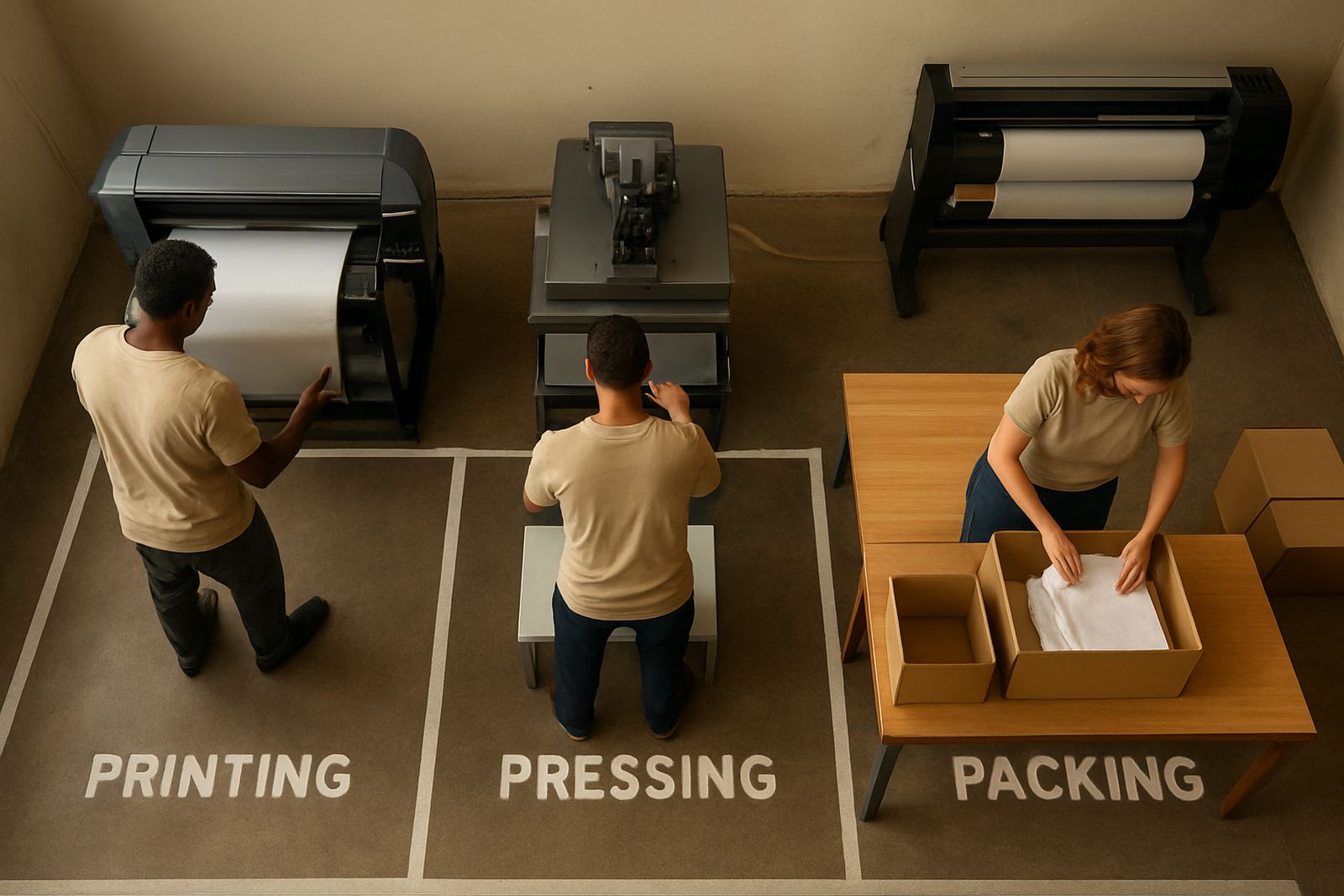
When space is tight, the best layout starts with the job list. A shop that does garment decoration, label printing or short-run colour work needs different zones for incoming stock, printing, curing, trimming, packing and dispatch. If those steps are mixed together, operators spend too much time walking, turning and waiting. That slows production and makes mistakes more likely.
In a Midrand unit of about 60 square metres, a sensible approach is to keep the printer on one side, finishing and inspection on the other side, and the consumables in a clean central store. Leave the main walking path clear. If two people can pass without squeezing sideways, you are already ahead. Compact spaces work best when every metre has a job, but not every metre is packed full.
- Map each job from intake to dispatch before buying furniture or tables.
- Keep frequently used media within arm’s reach of the operator.
- Separate clean stock from finishing waste and offcuts.
- Plan for at least one clear route to the door for packed orders.
Build Around the Printer, Then Add Support Stations
The printer is usually the heart of the room, so place it where the operator has space to load media, open covers and check output without bumping into storage. Leave enough clearance for maintenance access at the rear and sides. If the machine needs a fresh air supply or vents, do not push it into a corner just to save floor space. Heat and dust build up quickly in small rooms, especially in summer or during load-shedding when doors stay shut.
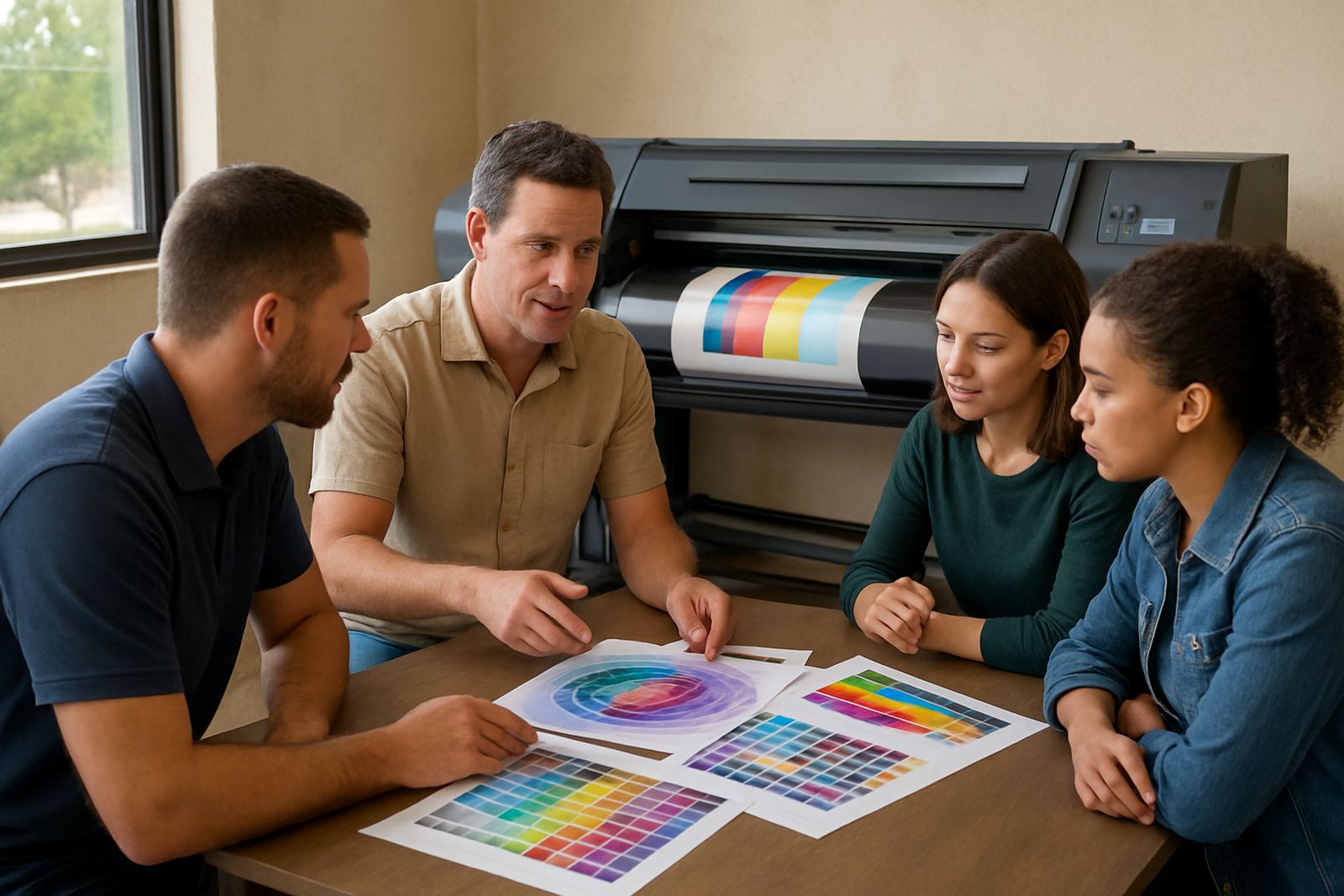
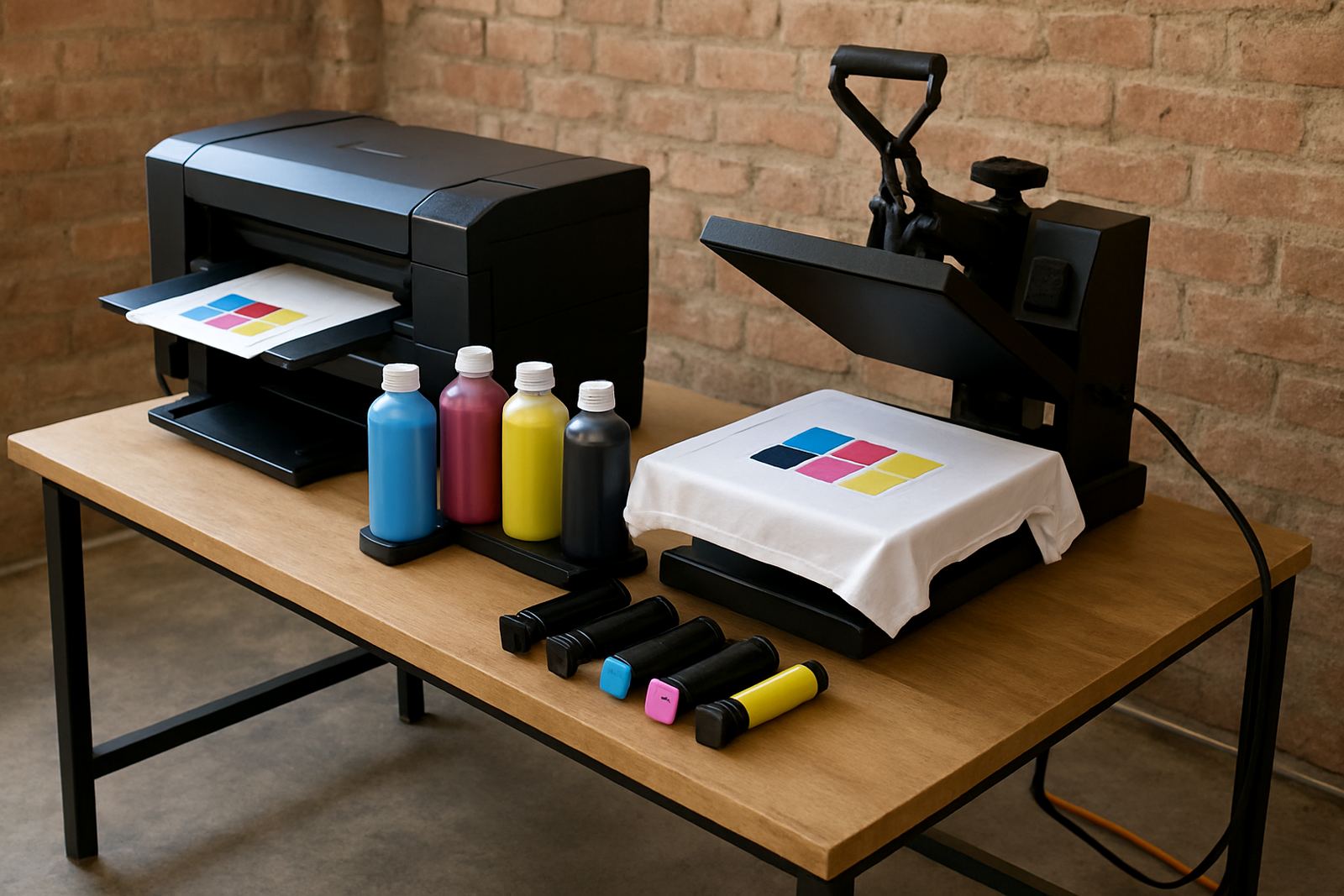
Next, set up support stations in the order work happens. A label printer may need a small pre-check area for media and colour matching, while a garment decoration setup may need pressing, curing or transfer finishing a short distance away. Keep the finishing station close enough to cut down travel, but far enough away so heat or paper dust does not reach the printer.
- Printer zone with power, data and easy maintenance access.
- Media and toner store in a dry, shaded corner.
- Finishing area with a heat-safe surface and extraction where needed.
- Packing table near the exit for faster dispatch.
Use Vertical Storage and Slim Furniture
In a small shop, floor space disappears fast when everything sits on the ground. Vertical storage helps keep the room open while still giving you enough room for boards, rolls, sheets and consumables. Tall shelving, wall racks and slim cabinets can do the job better than bulky cupboards. If the area is in Sandton or near a busy industrial node, dust from traffic and nearby building work is also a factor, so closed storage is often better than open piles.
Choose furniture that is easy to clean and move. Heavy fixed counters can trap dust and block access during servicing. Mobile trolleys are useful for inks, labels, spare parts and packed orders, but do not overfill them. A trolley should solve a problem not become another obstacle. For coastal shipments heading to Durban or the Eastern Cape, sealed storage helps protect media from moisture and curling.
- Store rolls and sheets upright where possible to save floor area.
- Use wall-mounted hooks for tools and cables.
- Keep backup consumables in labelled sealed boxes.
- Use lockable storage for higher-value stock and printheads.
Leave Space for Power, Cooling and Maintenance
Many compact shops run well on paper but fail in real life because the power and maintenance setup was treated as an afterthought. Printers, transfer machinery and drying equipment need stable power, and some setups need backup support during outages. In South Africa, that matters. A small layout should allow space for power protection, battery units or changeover gear without putting them under the same table as the printer.
Good airflow matters too. A room that traps heat will affect print consistency and can shorten consumable life. If the shop is in an upper-floor unit in Pretoria or a factory space in the East Rand, check where heat collects during the day and leave room for air movement. The same goes for maintenance access. If a technician has to move three machines to reach one panel, downtime will cost more than the space saved.
- Keep electrical gear off the floor and away from cleaning water.
- Allow clear access to covers, filters and service panels.
- Use cable paths that do not cross walkways.
- Separate wet cleaning areas from print and media storage.
Plan the Shop for Short Runs and Fast Turnaround
Small shop layouts work best when they support short runs, repeat jobs and quick changeovers. That means the operator should not need to walk across the room for every adjustment or reprint. Keep the most common media, toners and finishing items close to the machine, while less-used stock can stay further away. The aim is to reduce motion without making the room feel crowded.
A good local example is a two-person shop in Midrand that handles garment transfers and label work for schools, spaza brands and local events. One side of the room holds the printer and media rack, the middle has a trimming and checking table, and the back corner carries packing material and finished orders. The team can run small jobs, check colour and dispatch same day without crossing paths too often. That kind of layout is practical for Johannesburg traffic too, because orders can be packed and ready before the courier arrives.
As the business grows, this sort of layout also makes expansion easier. You can add one more finishing table, a second printer or a dedicated packing shelf without redesigning the whole room. That saves money and keeps the shop productive while orders increase.
Design for Staff Movement and Safe Handling
A compact room can still be safe if the traffic pattern makes sense. Staff should be able to move between intake, production and packing without carrying stock over cables or around sharp corners. If a shop has more than one operator, think about where they meet, where they turn and where they place finished items. Tight spaces often cause the small accidents: bumped corners, bent media, dropped boxes and damaged printheads from rushed handling.
Simple rules help a lot. Keep the heaviest stock low, the most delicate stock protected, and the walkways free. Mark where cartons, tools and scrap should go. If there is a shared loading bay in Midrand or Randburg, make sure the route from the door to the production area stays clear for incoming pallets or courier bags. It sounds basic, but that discipline is what keeps a compact shop running properly.
- Do not store stock in walkways or in front of fire exits.
- Give each operator a defined work zone where possible.
- Keep blades, solvents and cleaning cloths in one safe place.
- Use labelled bins for waste, offcuts and returns.
Keep Room for the Next Machine
The biggest mistake in a small shop is designing for today only. A layout that looks neat now may leave no space for another printer, a finishing unit or a better packing area later. Even if growth is slow, keep one side of the room flexible. That may mean choosing a smaller table now so you can add a second machine later, or leaving a wall open for shelving instead of filling it immediately.
If your shop serves clients in Gauteng, the Free State or across the border, growth often comes in small steps: another school order, a local brand, a label run for a reseller. A layout with a little breathing room handles that growth better than a packed room that has to be torn up every time work increases. Think practical now, but leave one clear path for the next stage.
For advice on compact production planning, machine placement, colour control and consumable planning, CMYK Industries in Midrand works with print shops across South Africa and neighbouring countries. We see the same problem often: good equipment placed badly. The fix is usually simpler than people expect, and it starts with the room you already have.