What Our Workflow Advice Covers
Workflow Advice from CMYK Industries is built for shops that handle garment decoration, label runs and short-run colour work in busy production rooms. We look at the full path from job intake to packing, including artwork handover, media choice, colour control, operator handoffs and the last finishing step. The goal is simple: fewer bottlenecks, less rework and more predictable output on the floor.
Our team in Midrand works with shops in Johannesburg, Pretoria, the East Rand, the West Rand and further afield into neighbouring countries. We can advise on production room size, operator numbers, daily volume and the mix of machines you already use. Whether you print 20 transfers a day or 500 labels a shift, the advice is tied to your actual work pattern not a generic theory.
- Layout planning for print, dry, cure and pack areas
- Batching rules for short runs and mixed artwork
- Finishing flow for cutting, weeding, laminating and packing
- Operator task split for one-person and multi-person teams
- Material handling for toners, films, papers and label media
Production Bottlenecks We Look For
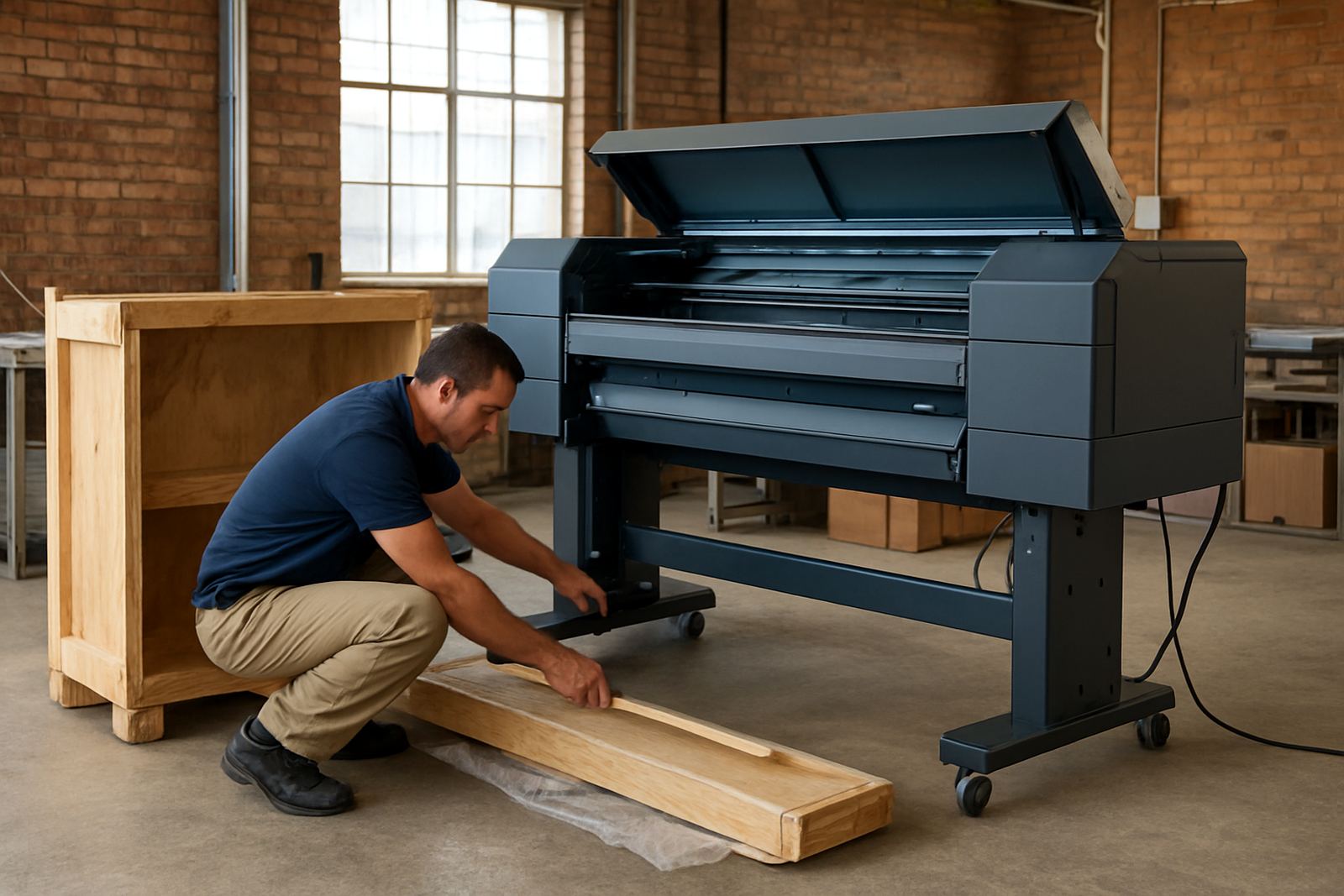
Most waste in a small print room happens between tasks, not during the print itself. We check where jobs wait, where operators keep walking back and forth, and where media is stored too close to heat, dust or direct sun. In Gauteng winter, dry air can affect static on films and paper. On the coast, humidity can change how media feeds and how powder or adhesive behaves. Those details matter in real production.
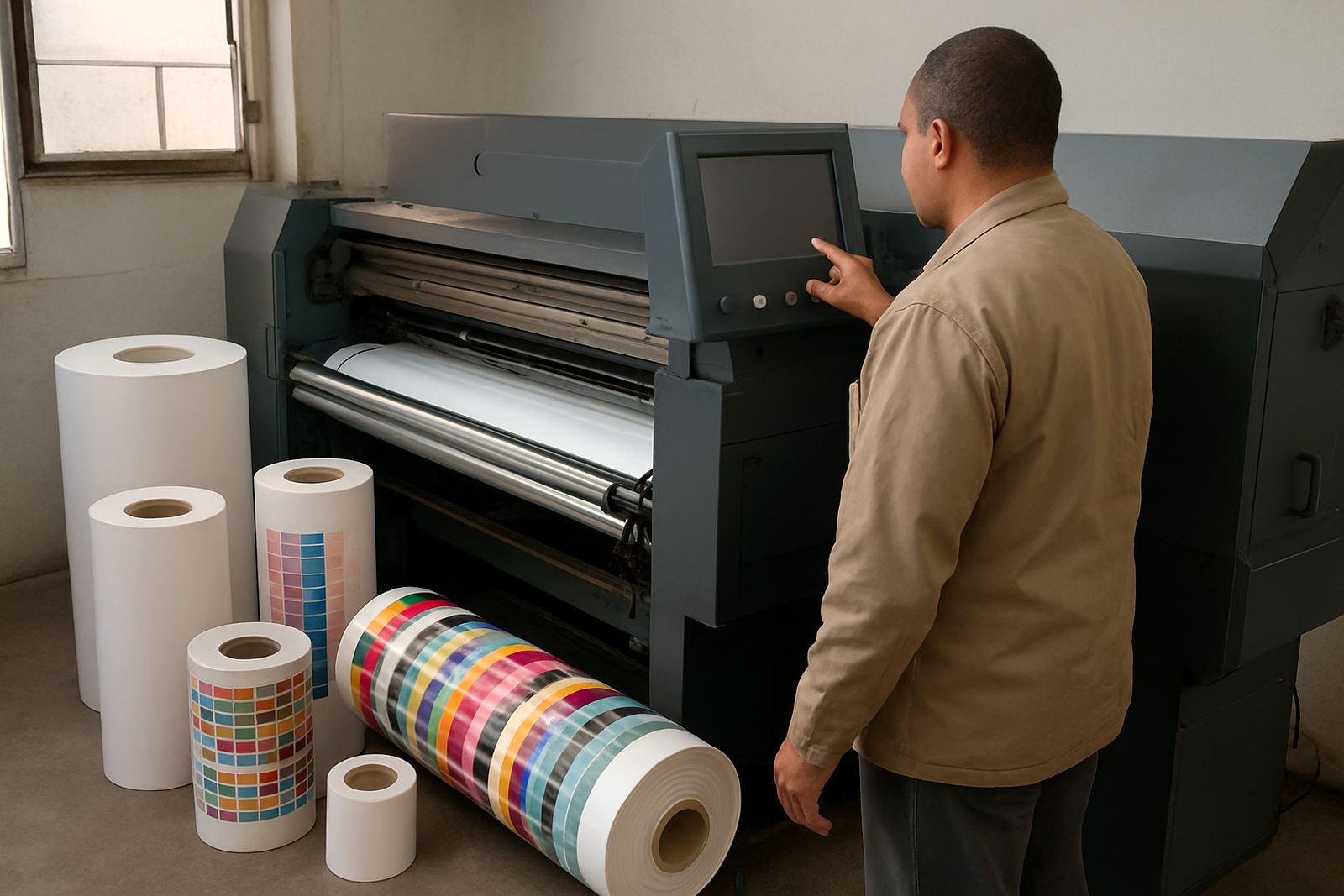
We also assess the way jobs are released. If every order arrives as a single urgent request, colour work becomes stop-start and machine time gets lost. If jobs are grouped by media type, colour count, curing method and finish, the same equipment can handle more work in the same shift. This is especially useful during load-shedding windows, when every minute of powered runtime counts.
- Unclear job tickets and missing print details
- Mixed media stored together without labelling
- Jobs waiting for finishing tools or cut files
- Colour changes done too often between similar runs
- Packing and dispatch taking space inside the print zone
How We Improve Layout And Batching
We start by mapping your room and your daily job sequence. That includes where stock arrives, where it is checked, where print happens, and how finished work leaves the floor. In many shops, moving one table or shelf by a metre can save a lot of walking time. In other cases, the real gain comes from separating wet, warm and finished areas so no one crosses paths carrying open media or cured items.
Batching advice is practical and specific. We show how to group similar jobs by colour count, substrate and finish so the machine stays in one mode for longer. For label work, that may mean separating short urgent runs from repeat orders that can be collected and printed together. For garment decoration, it often means setting fixed print, cure and press batches so the operator is not resetting heat and tension settings every few minutes.
- Room zoning for receive, print, finish and dispatch
- Batching by colour, size, substrate and urgency
- Stock placement within easy reach of the main machine
- Clear labels for partial rolls, open packs and completed jobs
Finishing Efficiency For Transfers And Labels
Finishing is where many jobs slow down. Cutting, weeding, heat pressing, laminating and packing all need a clear order, and the best order depends on the product mix. We help you set the right sequence for your shop so operators do not double-handle work or hold jobs at the wrong stage. If your labels need slitting or your transfer media needs post-cure handling, that step should be built into the workflow from the start.
We also advise on inspection points. A quick check after print, another after cutting and a final check before packing can stop faulty batches from leaving the premises. That matters for shops supplying retail, schools and contract customers where a simple mistake can lead to returns. Good finishing flow does not need fancy equipment, just a sensible path and clear responsibility at each step.
- Suggested finishing order for each product type
- In-process checks to catch print or cut faults early
- Heat press and cure planning around batch size
- Clean packing areas to avoid dust on finished goods
Turnaround, Pricing And Support Format
For most workflow advice requests, we begin with a brief phone call or email discussion, then arrange a remote review or an on-site visit depending on the size of the operation. A simple shop may only need a few recommendations and a revised job flow. A larger site with multiple printers, presses or label finishing stations may need a fuller assessment with notes for each production step. Turnaround is usually fast once we have the job counts, machine list and a few photos or measurements.
Pricing is based on the scope of the review, the number of machines involved and whether the work is done remotely or on-site in Midrand, Sandton, Pretoria or further out. We keep it straightforward and practical, with no hidden extras. If your operation needs a follow-up after changes are made, we can schedule that too so the new workflow settles in properly. Small typo sometimes happens on production notes and that is normal, what matters is that the process works.
- Remote review for smaller or multi-site teams
- On-site assessment for full floor mapping
- Optional follow-up after the first round of changes
- Pricing based on scope, travel and machine count
Maintenance Intervals That Keep The Workflow Steady
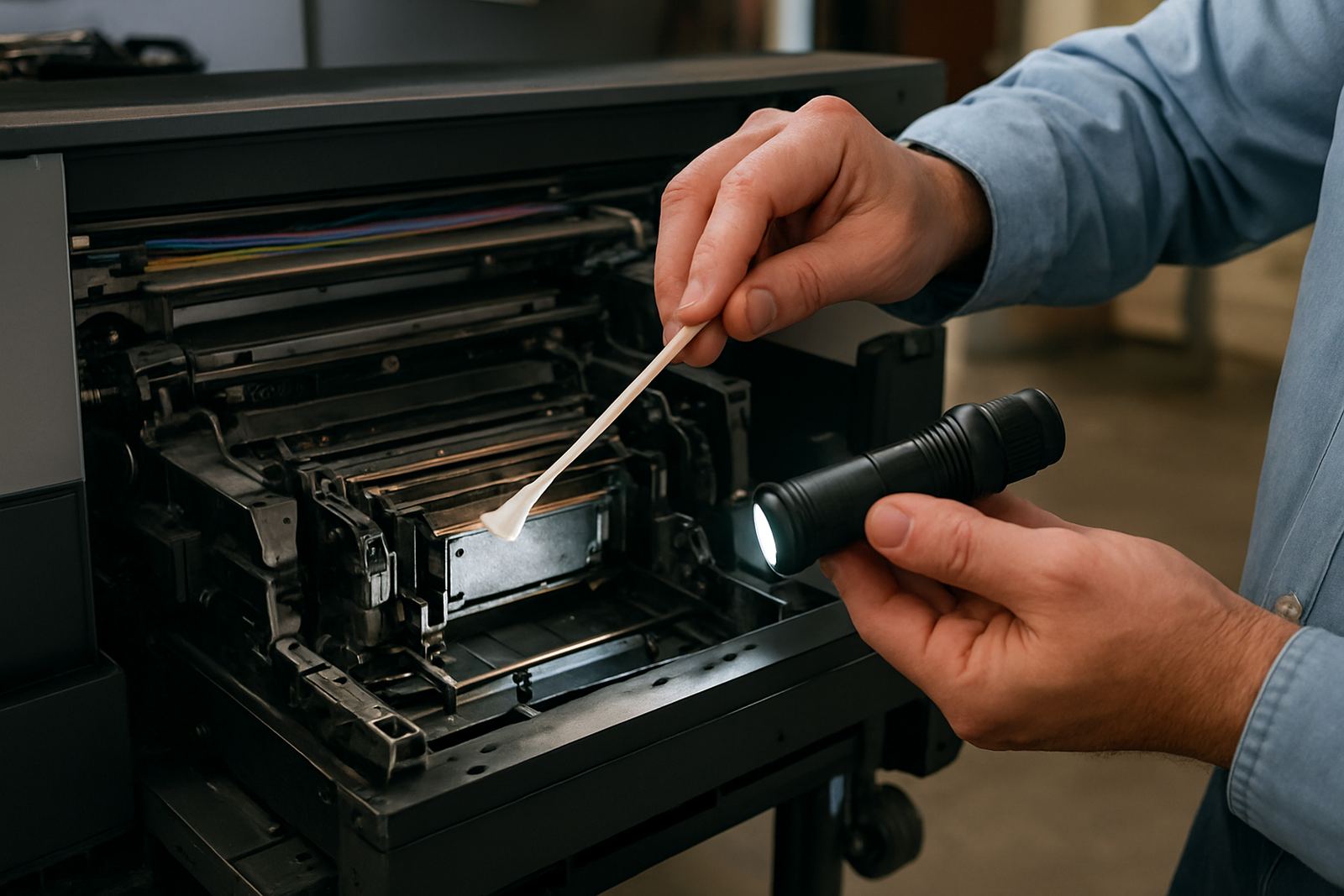
Workflow advice is stronger when it is tied to maintenance. A clean, well set-up machine room is easier to schedule and much less likely to stall in the middle of a run. We usually recommend daily, weekly and monthly checks so small issues do not grow into downtime. Printheads, feed paths, rollers, heaters and cooling points all need attention at different intervals, and those intervals should suit your volume not a generic calendar.
For shops working in dusty areas or where power dips are common, maintenance needs to be more frequent around cleaning and power protection. Coastal humidity can call for tighter media storage and more regular checks on adhesive and toner handling. If you print labels, garment film or short-run colour sheets every day, a short maintenance routine before start-up and at close can save hours later in the week.
- Daily: clean contact points, check media path and confirm job settings
- Weekly: inspect rollers, guides, heaters and cutting alignment
- Monthly: review colour consistency, storage and operator handover steps
- After every power interruption: check calibration and test on a small run
Who This Service Suits
Workflow Advice is ideal for print shops that are growing, adding new equipment or trying to get more out of the machines they already own. It suits garment decorators, label producers, contract print rooms and mixed production shops that need better daily control. If your team is busy but output feels uneven, the problem is often not the printer it is the way jobs move through the room.
We work with owners, managers and production teams who want a clear plan they can use straight away. That may include a better layout for a Midrand workshop, a batching rule for a Pretoria label line, or a cleaner finishing routine for a team in the East Rand. The result is a calmer floor, better use of labour and a more predictable turnaround for customers across South Africa and neighbouring markets.
If you need practical advice grounded in real production conditions, we can help you sort the workflow without turning it into a complicated project. One well planned change at the right point often saves more time than several expensive fixes later on.
Key facts
| Service type | Production workflow review and practical process advice |
|---|---|
| Primary focus | Layout, batching, finishing and handoff efficiency |
| Typical support areas | Midrand, Johannesburg, Pretoria, East Rand, West Rand |
| Typical turnaround | Same week for remote reviews, site visits by arrangement |
| Pricing approach | Quoted to scope, travel and machine count |
| Best suited for | Short-run colour print, garment decoration and label production |