What Colour Calibration Covers
Colour calibration is the process of setting your printer, media and workflow so that the same file prints as close as possible to the same result every time. For shops doing garment decoration or label printing, that matters when a re-order comes in weeks later, or when a job must match an approved sample across different shifts. We help reduce drift, harsh skin tones, patchy solids and weak blacks, especially on coated media, transfer films and self-adhesive label stock.
Our support is practical and job-focused. We look at the machine condition, ink or toner behaviour, media choice, temperature and humidity, and the way files are prepared. In Gauteng, dry winter air and summer heat can shift output more than people expect. On the coast, humidity can change drying and feed behaviour, so settings that work in Pretoria may need adjusting for Durban or Gqeberha.
- Printer and media profiling for repeat jobs
- Colour target setup for logos, solids and photographs
- Basic density, ink limit and linearisation checks
- Support for garment transfer and label applications
How We Carry Out the Adjustment Process
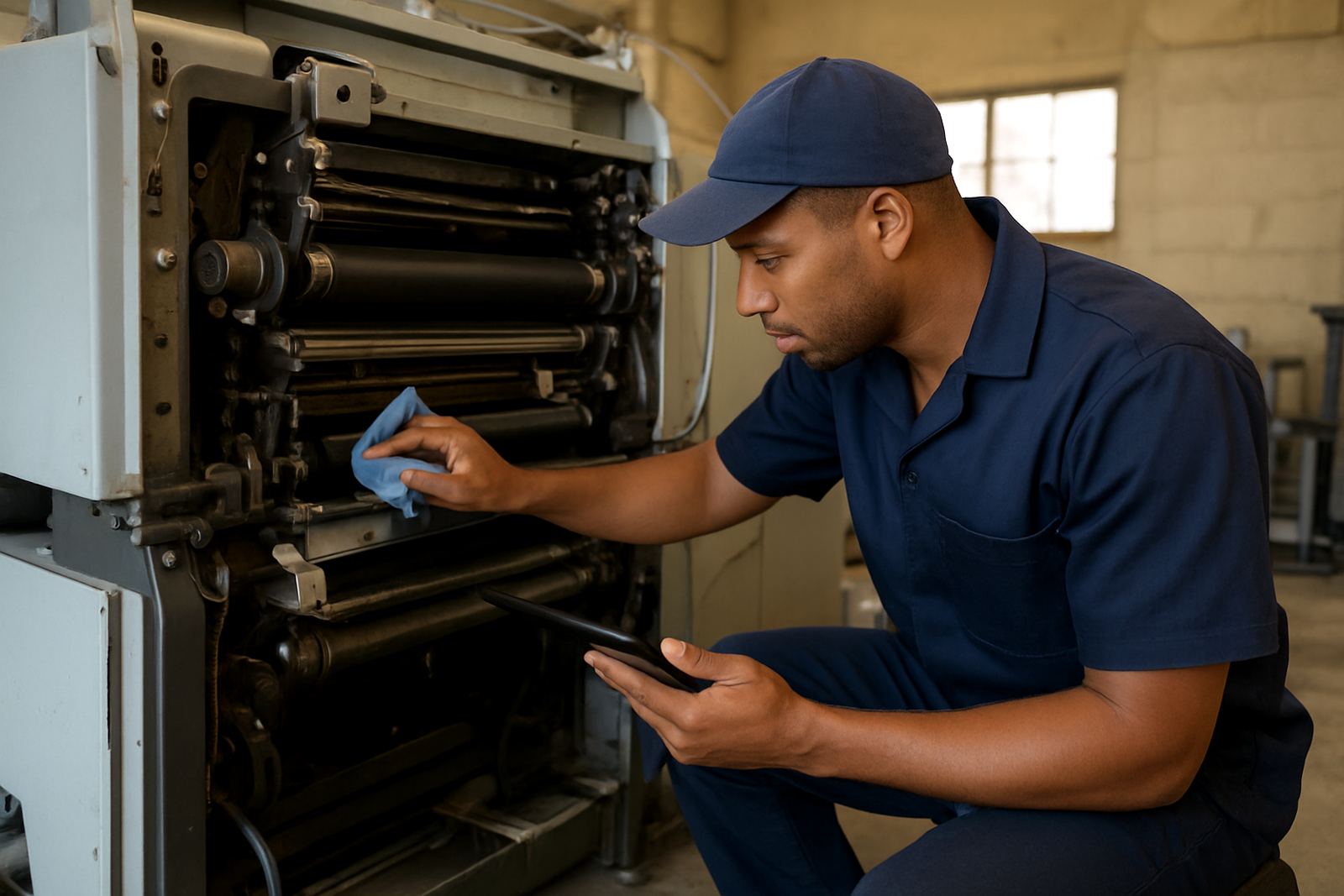
We usually start with a short assessment of the machine, current output and the media you use most often. From there we define the target conditions for the job type, then test and record settings until the printed result is stable. If a printer is already out of alignment, calibration alone will not fix everything, so we also check printheads, feed paths, curing or drying settings and consumable condition.
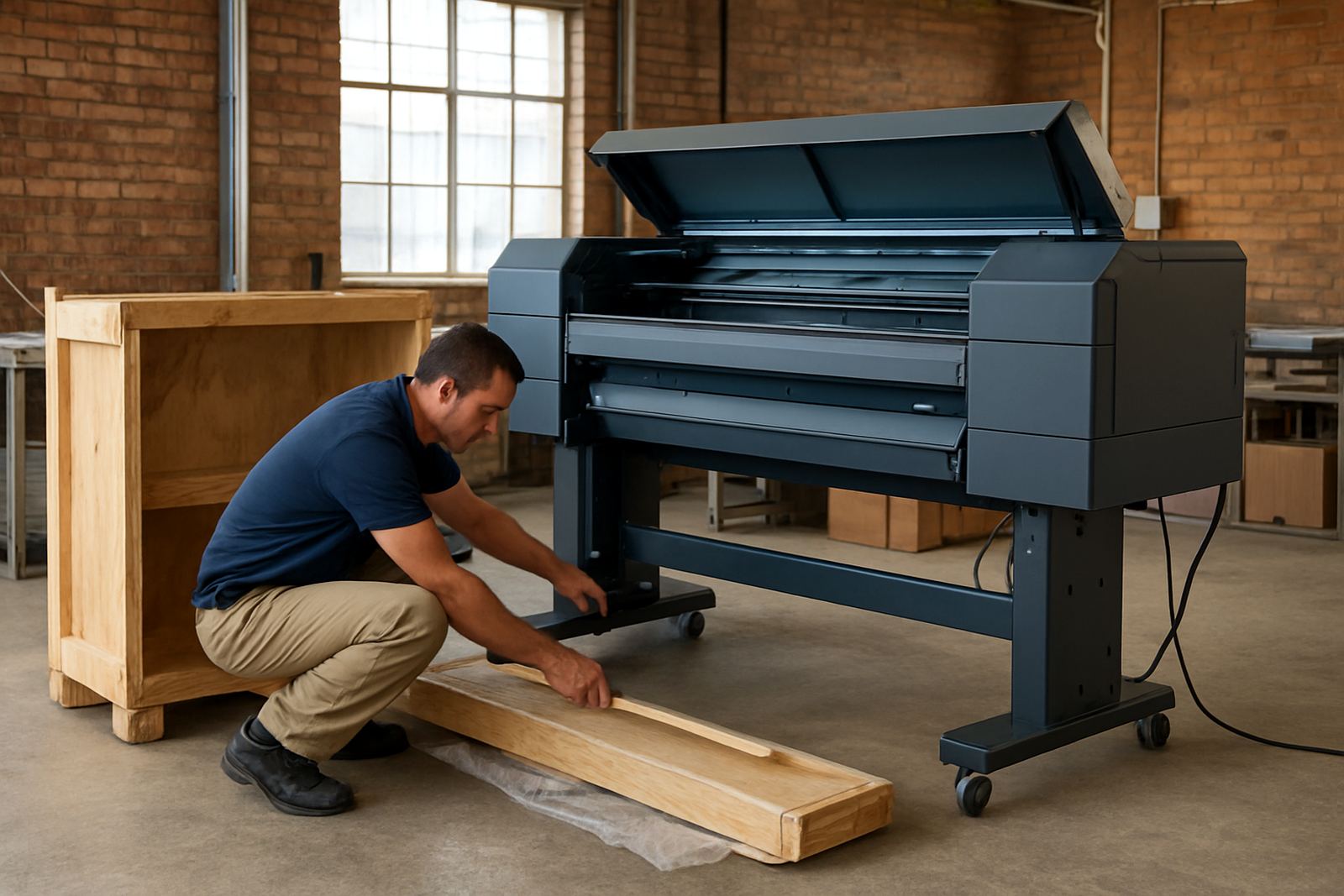
The process is kept simple for your team. We can work on site in Midrand, Sandton, Pretoria, the East Rand, the West Rand or further afield by arrangement. For multi-branch groups, we can standardise one setup across more than one machine so that a file printed in one branch matches another branch more closely.
- Initial assessment and sample review
- Machine checks and condition report
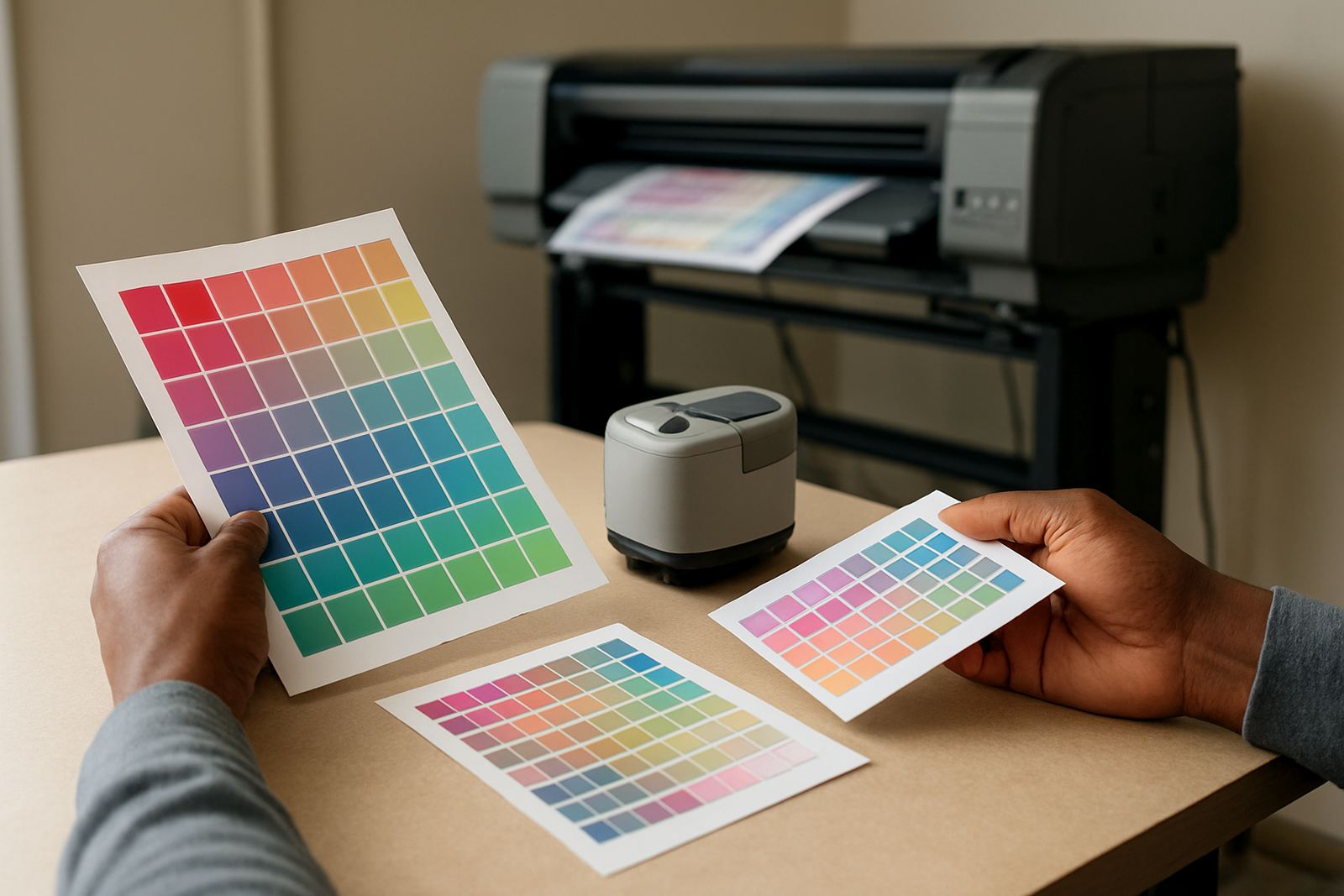
- Test prints, measurements and adjustment
- Profile creation and sign-off sample
Media, Garment and Label Job Matching
Different media need different handling. A transfer film for garments behaves differently from coated label stock, synthetic media or uncoated paper. If the substrate changes, your colours can shift even when the file stays the same. We help build profiles for the materials you actually use, not just a generic setting that looks good on one sample and fails on the next order.
For garment work, this can include white underbase behaviour, black control and bright spot colours on transfer systems. For labels, the focus is often small text, barcode clarity and consistent brand colours across short runs. We also consider the practical side of production, like whether the job must dry fast for same-day dispatch or whether it is being packed for transport to Botswana, Namibia or Mozambique.
- Garment decoration transfer settings
- Label stock and barcode readability checks
- Short-run colour matching for repeat orders
- File and proof alignment with production output
Turnaround, Pricing And What Affects It
Turnaround depends on the number of machines, the media types involved and how much correction is needed before profiling can begin. A single printer on one main media may be completed quickly, while a shop with several print engines, different films and multiple operators will need more time. If the machine has clogging, feed problems or unstable output, we first correct those issues so the profile is worth keeping.
Our pricing approach is straightforward. We normally quote according to the scope of the work, whether it is a one-off setup, a multi-machine standardisation job or ongoing support. If you need remote follow-up after the visit, that is planned separately so you know what the cost will be before work starts. No shop likes a surprise on the invoice, especially when margins are tight.
- Single machine or multi-machine pricing
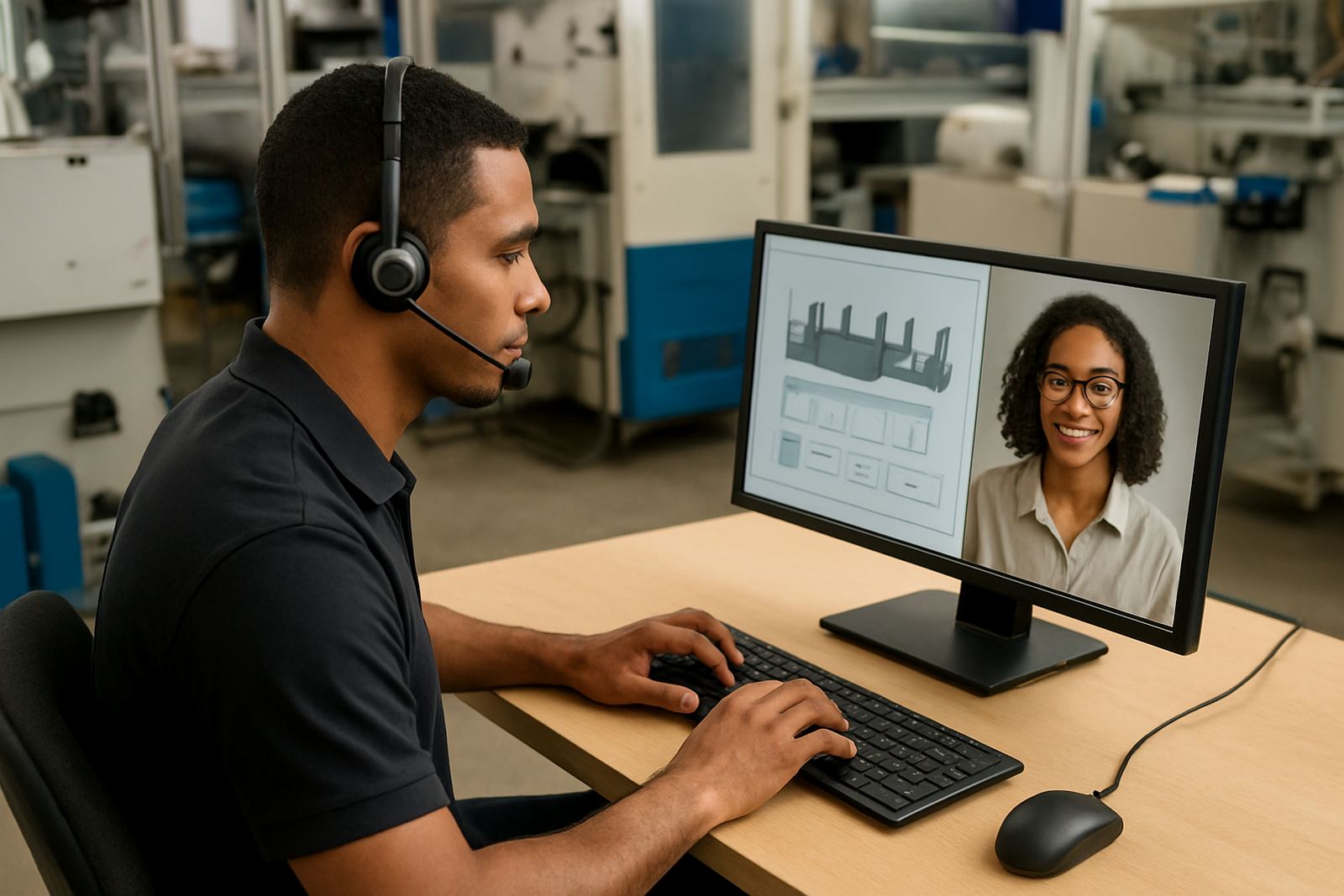
- On site or remote support options
- Scope based quotes for clear budgeting
- Follow-up support available by arrangement
Recommended Maintenance Intervals
Colour stability does not hold by itself. Heads drift, rollers wear, media batches change and operators set up jobs differently. For most busy print shops, we suggest a colour review every 3 to 6 months, or sooner if you change media suppliers, move the machine, replace major parts or notice a shift in output. Shops running long hours in high dust areas may need checks more often.
If you print in a humid or coastal area, or if load-shedding causes repeated shutdowns and warm restarts, more frequent checks can help prevent wasted stock. A short maintenance rhythm saves more money than reprinting 200 labels or a full garment run because the colours moved and nobody caught it in time.
- Quarterly checks for busy production sites
- Extra review after machine repairs or moves
- Profile update after media or ink changes
- Operator refresher after workflow changes
Why Shops In Midrand And Beyond Use This Service
Print shops call us when they need output that can be repeated, not guessed. That includes new shops setting up for the first time, established teams trying to reduce rework and companies printing for retail clients who expect the same colour across every batch. We understand local production pressure, from rush work in Johannesburg to dispatch schedules serving the rest of South Africa and neighbouring countries.
Our team includes technical, operations and customer support staff who work with print environments every day. That means we can look at the full picture, from machine condition and consumable planning to operator habits and job routing. Colour calibration is not only about the profile file, it is about getting the whole shop to behave in a repeatable way.
If you need a practical assessment, we will help you decide whether your machine is ready for profiling or whether it needs maintenance first. That honesty matters, because a profile built on a weak machine will not hold for long and can cost you time, media and goodwill. A quick clean and the right setup often makes the difference.
Key facts
| Service type | Colour calibration and media profiling support |
|---|---|
| Typical scope | Single printer, multi-machine or multi-branch standardisation |
| Media types | Transfer film, coated labels, synthetic stock and selected papers |
| Coverage area | Midrand, Johannesburg, Gauteng and Southern Africa |
| Turnaround | Depends on machine condition, media count and profile depth |
| Maintenance interval | Every 3 to 6 months, or after media or hardware changes |