What Preventive Maintenance Covers
Our preventive maintenance service is built for short-run colour work, garment decoration and label printing where repeatable output matters. We inspect the machine, clean key components, check wear items and confirm that the print system is running within normal operating ranges.
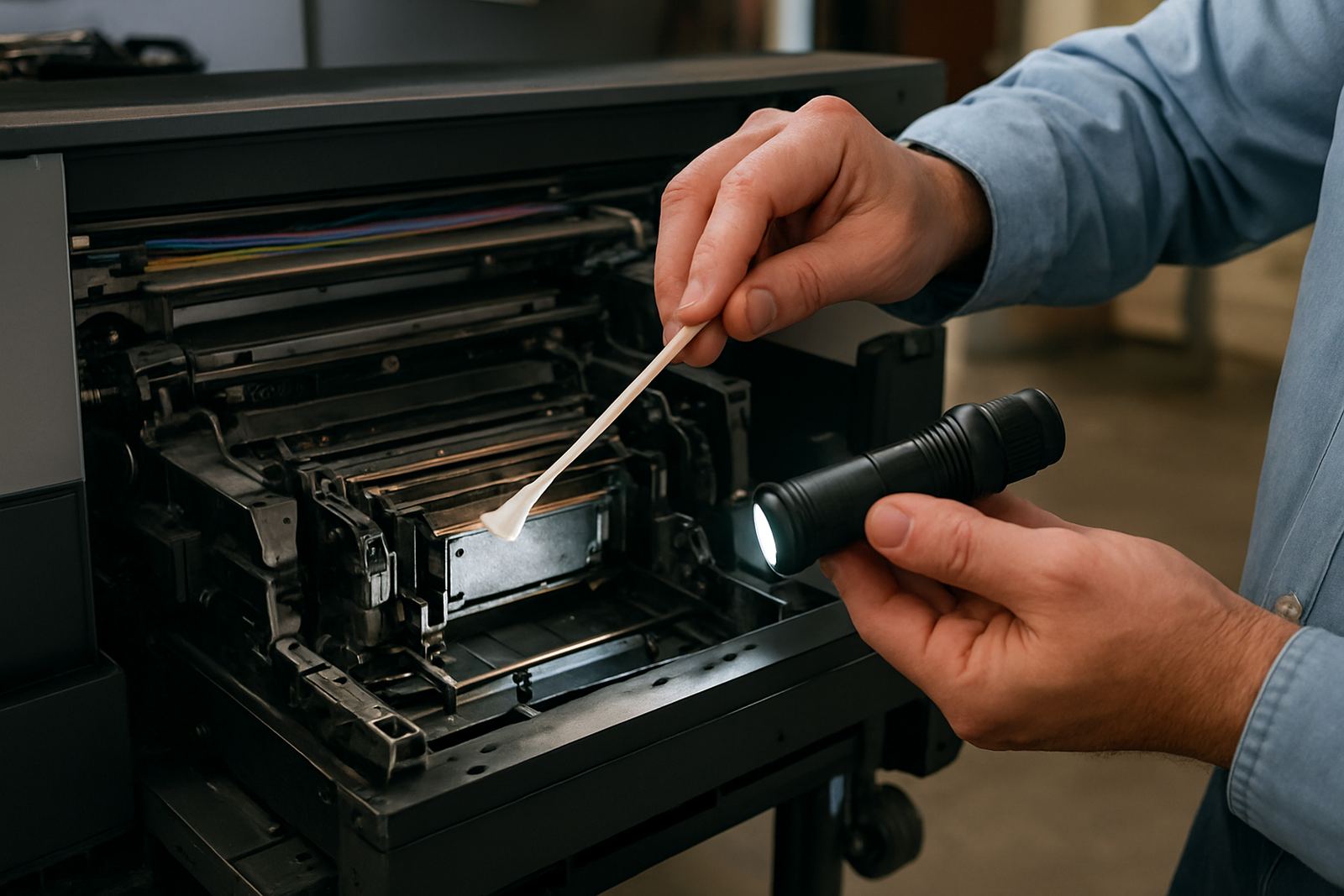
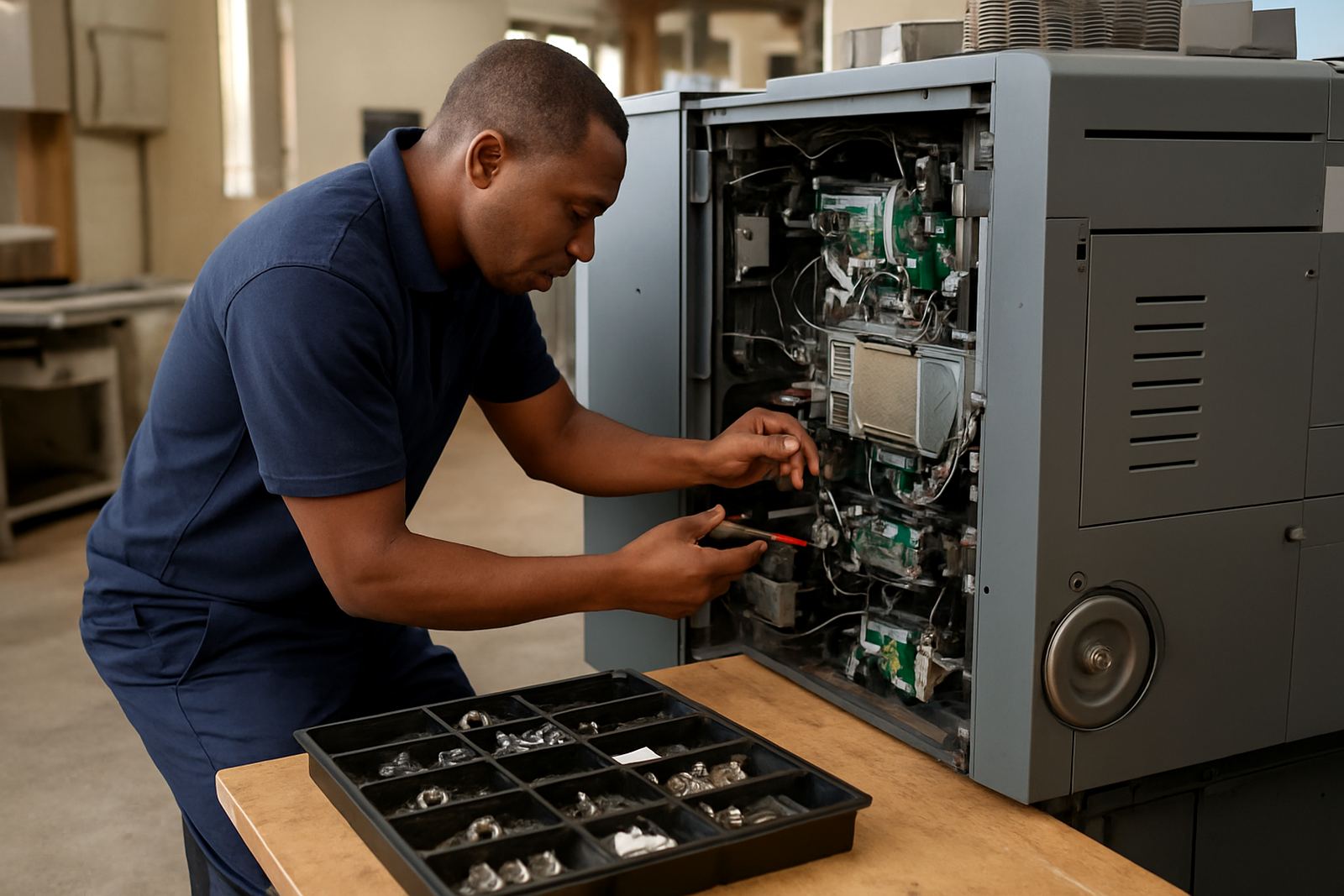
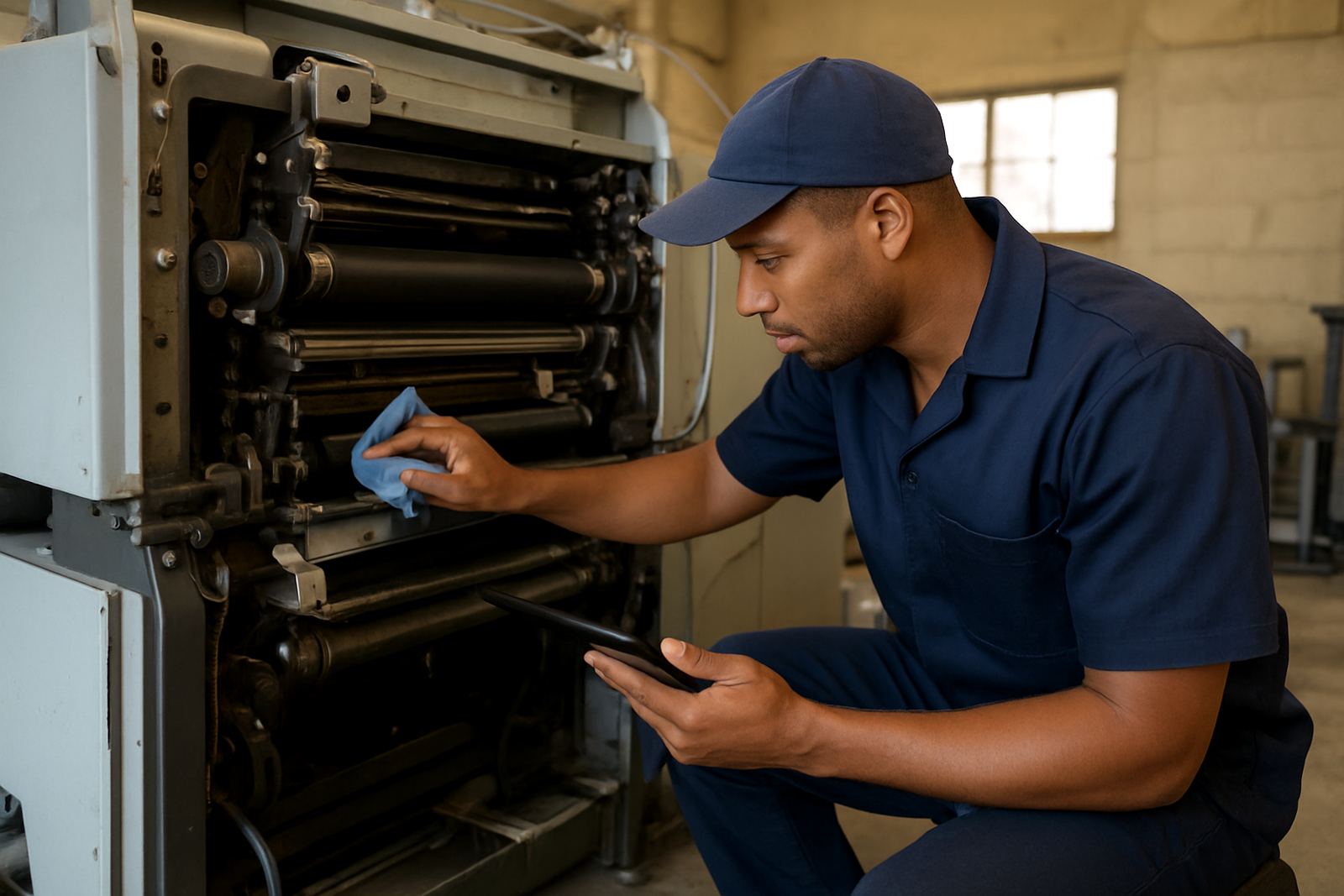
Typical work includes feed path cleaning, platen and carriage checks, belt and roller inspection, head care, vacuum and pressure checks, electrical connection inspection, software and firmware review where relevant, and test output verification. On transfer and label systems we also look at tension, registration, curing or heating consistency and media handling. Small faults picked up early usually cost far less to correct than a stopped production line later.
- General inspection of machine condition and operating noise
- Cleaning of dust build-up, ink mist and media residue
- Checking alignment, registration and movement accuracy
- Wear part assessment for belts, rollers, wipers and filters
- Colour output check and stability test prints
How We Service a Print Shop Machine
We keep the process practical so your team knows what is happening and why. First we ask for the machine model, current issue if any, duty cycle and the type of media or garments you run. That lets us prepare the correct tools and consumables before the visit or remote session.
Next we isolate the machine, clean and inspect the working areas, then test each function in sequence. If we find parts nearing end of life we flag them before they fail. For customers in Midrand, Sandton, Pretoria and the East Rand we can often combine service planning with on-site support, while customers in other provinces or neighbouring countries can use our remote assessment and parts dispatch process.
- Step 1: Service booking and machine history review
- Step 2: On-site or remote inspection and fault screening
- Step 3: Cleaning, adjustment and calibration checks
- Step 4: Test production run and output review
- Step 5: Service report with recommendations and next interval
Recommended Maintenance Intervals
There is no one-size-fits-all schedule because a machine running in a clean studio in Midrand will not wear the same way as a unit working daily in a hot shop with power dips and dust. As a guide, high-use print environments should book preventive maintenance every 1 to 3 months. Medium-use sites usually do well on a 3 to 6 month cycle, while lighter-use machines can often be checked twice a year.
If your site runs near the coast, handles fine media, or works through load-shedding with frequent restarts, we normally shorten the interval. Machines that sit idle for long periods still need checks, since dried ink, roller flat spots and hidden electrical faults can build up even when output volumes are low.
We also advise a service after any move, major software update, head replacement or repeated colour drift. Waiting until the machine starts failing often means the maintenance window gets bigger and more costly.
Turnaround and Downtime Planning
For most scheduled visits we aim to complete the standard service within the same day, depending on the machine size and the condition it is in. If parts are required, we will tell you upfront whether the job can be closed immediately or if a return visit is needed once items arrive.
We understand that production time is money. That is why we try to work around shift changes, urgent print runs and municipal power patterns where practical. If a shop needs a late afternoon call-out or early morning start, we can plan around that where the route and workload allow.
- Standard service visit: usually 2 to 6 hours
- Machines with heavier cleaning needs: half day to a full day
- Parts-needed cases: quoted separately with clear lead times
- Remote follow-up: often same day, depending on queue and access
Pricing Approach For Scheduled Care
We price preventive maintenance according to the machine type, number of units, site access and the amount of labour required. A single desktop-format unit in Midrand is not priced the same as a wider production system with multiple stations, heaters and media paths. Costs are usually split into labour, travel where applicable, consumables used during the service and any replacement parts approved by you.
For customers with more than one machine we can set up a maintenance plan so the service cost is more predictable through the year. This is often better than paying for emergency call-outs after breakdowns. We can also help you plan annual consumables so the right cleaners, wipes, filters and wear items are kept on hand and not ordered in a rush.
All pricing is discussed before work proceeds. If we find an unexpected fault, we explain the options first so you stay in control of the spend.
What You Receive After The Service
Every preventive maintenance visit ends with practical feedback your team can use straight away. We note what was checked, what was cleaned or adjusted, any parts that need monitoring, and the recommended date for the next service. Where useful, we also leave machine-specific handling notes for operators so the same problem does not keep coming back.
That report helps with internal planning, warranty records and future fault tracing. It also gives your production team a cleaner handover, which matters when more than one operator is sharing a machine over different shifts.
- Service summary with checks completed
- Condition notes on key components and wear items
- Recommendations for the next interval
- Priority list for any follow-up repairs or parts
Key facts
| Service type | Scheduled preventive maintenance for digital printers, transfer machinery and label printing systems |
|---|---|
| Typical interval | Every 1 to 3 months for high-use sites, 3 to 6 months for medium-use sites |
| Visit duration | About 2 to 6 hours for standard machines, longer for heavy cleaning or multiple units |
| Coverage | Midrand, Johannesburg, Gauteng and supply support across South Africa and neighbouring countries |
| Output focus | Stable colour, fewer stoppages, cleaner media handling and longer machine life |
| Support methods | On-site service, remote checks, parts planning and follow-up recommendations |