Why operator training pays back in real production hours
When a machine is down, the cost is not only the repair bill. You lose production time, miss dispatch cut-offs, and end up rushing the next shift to catch up. Proper operator training reduces those stoppages because staff know how to load media correctly, spot warning signs early and handle the machine in a repeatable way.
In a short-run colour environment, small mistakes add up quickly. A label job with the wrong tension, a garment transfer run with poor heat settings, or media stored in a damp room can all waste stock and spoil output. Trained operators understand the basics of setup and routine checks, so the shop gets more usable metres from each roll and fewer rejected sheets. That matters whether you are working in Midrand, Pretoria or shipping into Botswana and Namibia.
- Fewer operator errors during setup and changeovers
- Less wasted media, toner and transfer stock
- More stable output across long shifts
- Better machine care from the first job of the day
What trained staff do differently on the floor
Good training is practical. It should cover what the operator touches every day, not only the theory behind the machine. Staff should know how to check temperature, feed alignment, nip pressure, curing time, cleaning routines and basic colour checks before a job starts. They should also know what normal sounds, smells and vibration levels feel like on their own equipment.
We often see shops where the machine itself is fine, but the process is inconsistent. One operator clears dust before every shift, another skips the wipe down. One person stores transfer media in a sealed area, another leaves it near an open roller shutter. After a few weeks, print quality starts drifting and nobody can explain why. Training creates a shared method, so the whole team works from the same standards instead of personal habit.
Uptime improves when the team can handle small issues early
Most breakdowns do not begin as major failures. They start as a blocked line, a worn cleaner, a small feed issue or a neglected setting. If the operator can identify these signs early, the machine can often be stopped before a larger fault develops. That means less calling for emergency support and fewer jobs stuck half finished.
For a print shop in Sandton or East Rand, uptime is about more than speed. It is about keeping to promised delivery dates when load shedding hits, when a courier arrives early, or when a customer asks for a same-day reprint. Operators who have been trained to perform safe shutdowns, correct restart procedures and quick checks can keep the line moving after power returns, instead of spending the first hour figuring out what went wrong.
- Quick fault spotting before the issue spreads
- Safer handling during power cuts and restarts
- Less dependence on emergency repairs for avoidable faults
- Cleaner handovers between shifts
Consumable control is part of training, not just buying stock
A lot of shops focus on equipment and forget that consumables drive the real running cost. Toner, transfer media, cleaning fluid, labels and maintenance items all need sensible handling. Training helps staff understand how to plan usage, store stock correctly and avoid waste caused by poor setup. A roll kept too long in humid conditions near the coast may curl or feed badly. In Gauteng, dust from open loading bays can also affect print quality if stock is left exposed.
When operators know how to match the job to the correct media and settings, you use less material to achieve the same result. That is especially important for short runs where every metre counts. It also helps with ordering. Instead of panic buying on a Friday afternoon, the team can forecast what is needed for the next week and avoid emergency courier charges. On a busy production floor, that kind of discipline saves money quietly, month after month.
Colour consistency gets better when people follow the same process
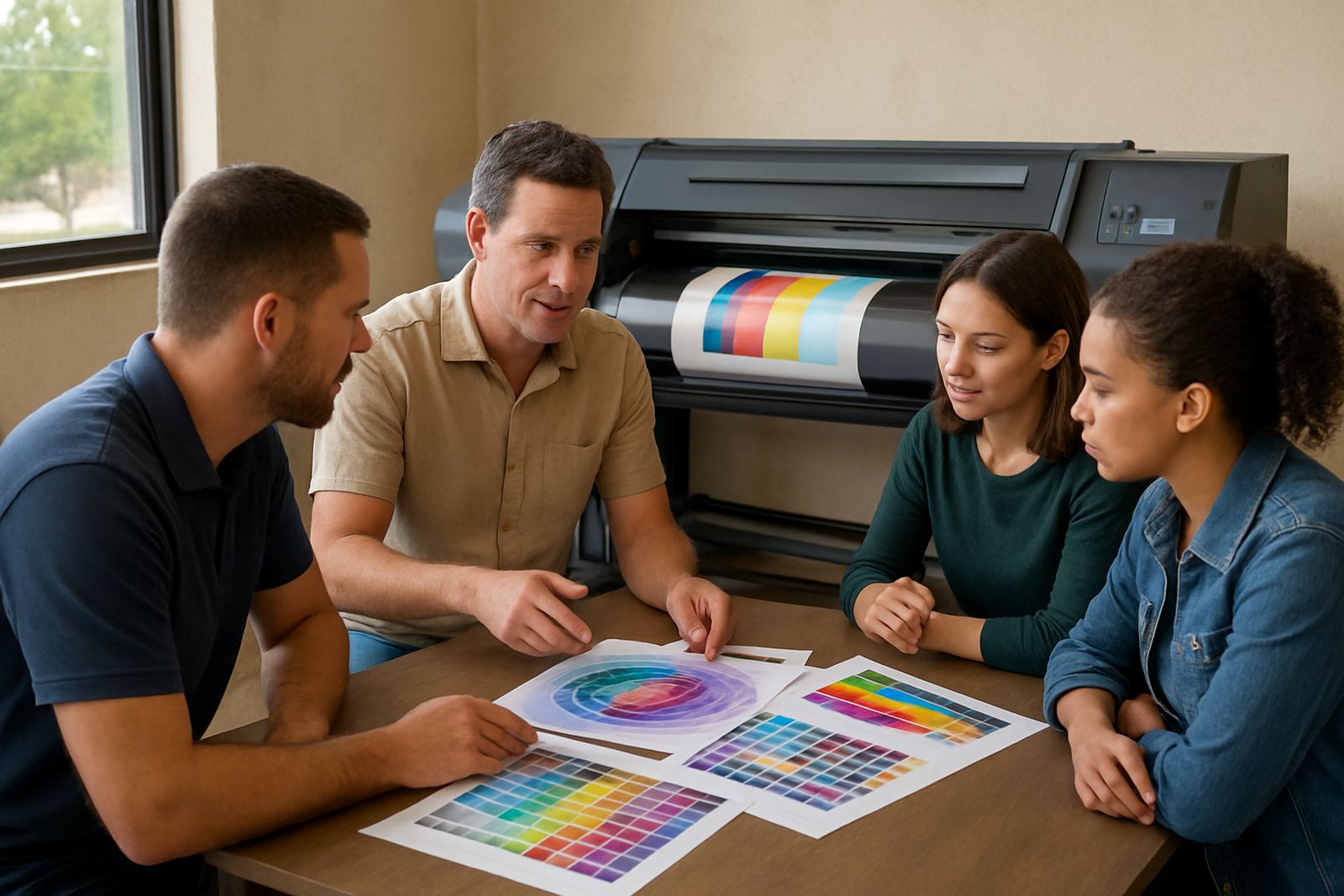
Short-run colour work leaves very little room for variation. If one operator uses a slightly different profile or skips a calibration step, the next batch may not match. Customers notice that quickly on labels, branded garments and repeat orders. Training gives the team a repeatable method for colour checks, media profiling and basic calibration so output stays closer from shift to shift.
That does not mean every machine runs itself. It means the team knows when to call for technical help, and when the issue is likely related to media, temperature, humidity or operator procedure. In practice, this saves time because the right person is looking at the right problem. A shop in Midrand supplying several branches can use the same workflow across all sites, which makes reorders and reprints simpler to manage.
- More consistent colour from morning to afternoon shifts
- Faster setup for repeat jobs
- Fewer disputes over brand matching
- Better decision making on media choice and profiles
A Midrand example that many shops will recognise
Consider a small print shop in Midrand with two operators, one finishing line and a growing label side. Before training, each person handled setup in their own way. One cleaned the machine thoroughly, the other only when output started to look rough. Media was opened and left near the press, and job notes stayed in WhatsApp messages. Output was decent on some days and frustrating on others.
After structured training, the team began logging settings, storing consumables properly and using the same start-of-shift checklist. They also learned what to do during a short power outage and how to protect work in progress. Within a few weeks, they were wasting fewer labels, the machine needed fewer interruptions and jobs were finishing closer to schedule. Nothing dramatic changed, just better habits. That is often what improves a print room most.
Training works best when it is backed by support and maintenance
Training should not be a once-off event that gets forgotten after the first busy season. Operators need refreshers after new machines arrive, when media changes, or when production starts stretching into longer shifts. It also helps to pair training with preventive maintenance and clear support contacts, so the team knows who to call when the issue is beyond their level.
At CMYK Industries in Midrand, we see better results when installation, operator training and ongoing support work together. A trained operator protects the machine, the machine protects the schedule, and the schedule protects revenue. For print shops serving Johannesburg, Pretoria and the wider Southern African region, that is not a nice extra. It is part of running a proper production floor.