Why a clean rewind saves time at the applicator
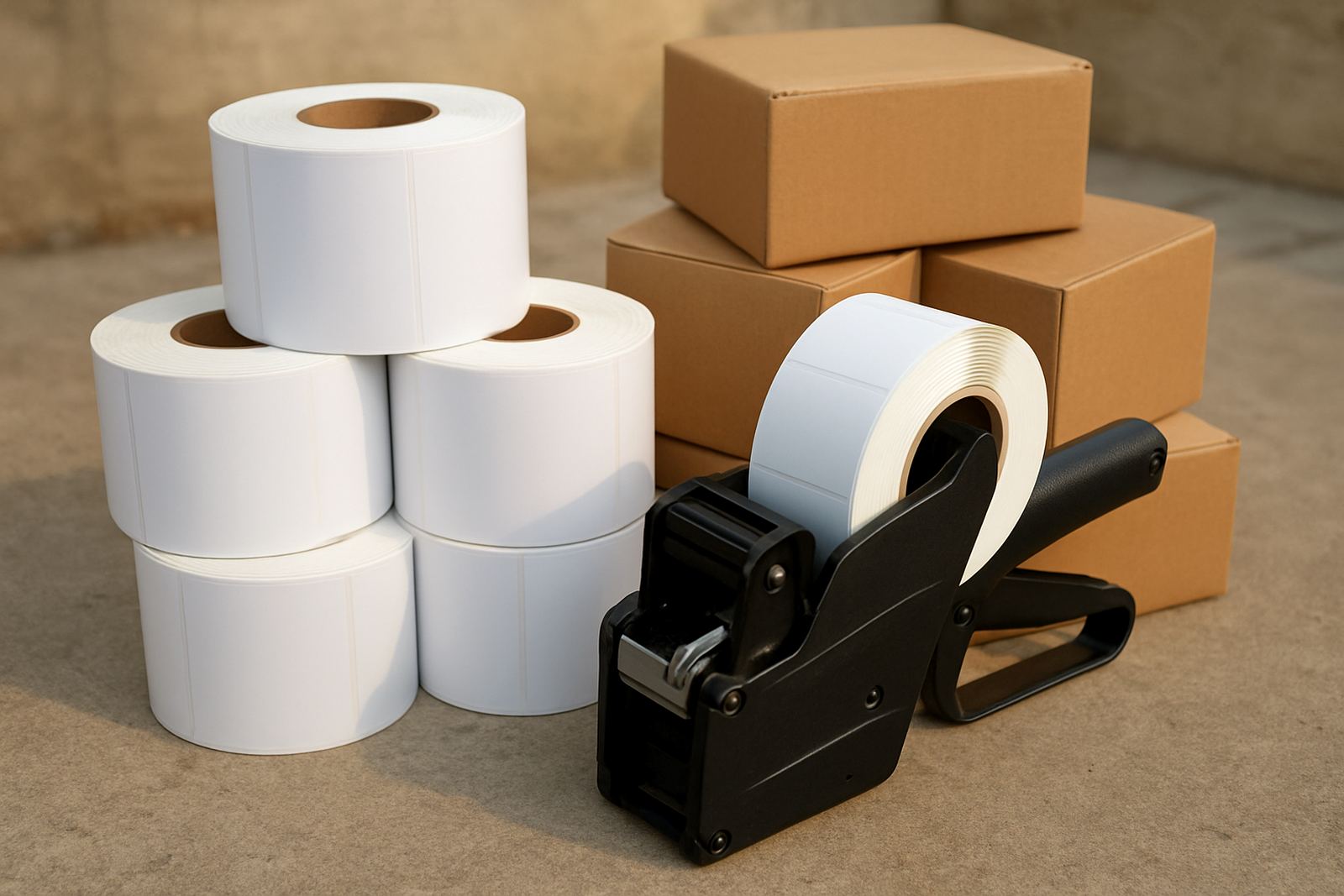
Labels that are wound with even tension feed better through hand applicators and semi-automatic machines. If the roll telescopes, loosens at the core or has uneven edges, the operator ends up correcting the reel instead of applying labels. That slows down packing lines, causes missed labels and often leads to wrinkled stock or misfeeds.
In practical terms, a good rewind means the label edge stays in line, the adhesive faces where it should and the roll unwinds at a steady rate. This matters for small food producers in Gauteng, logistics teams in Pretoria and contract packers working in tight spaces where one operator may handle several jobs before tea time. For short-run colour work, neat finishing is often the difference between a smooth handover and a batch of complaints.
Set the roll up for the way it will be used
Before you rewind, decide where the roll is going. A label reel for hand application may need a tighter core, clear leader and a practical outer diameter that sits well in the operator's hand. A roll for a semi-automatic applicator may need consistent winding direction, a fixed core size and a width that matches the machine guides. It sounds simple, but many problems start when a stock roll is made for printing convenience rather than actual use.
- Confirm the core size before production starts.
- Check winding direction for the applicator being used.
- Keep roll diameter within the machine's working range.
- Leave enough leader for clean threading and start-up.
- Match label spacing to the dispense speed, not just the print speed.
If the end user is in a humid coastal area such as Durban or Gqeberha, the finished roll should be stable enough to handle changes in moisture during transport and storage. That may mean tighter control on tension and a sensible choice of liner or face stock from the start.
Tension control is where most winding trouble begins
Too much tension can stretch the liner, crush the core and create a hard outer edge. Too little tension leaves the roll soft and uneven, which then shifts on the spindle or slips when the operator starts dispensing. The answer is not to wind as tight as possible, but to keep the pull steady from the first metre to the last.
On smaller label runs, especially where the press is stopping often for artwork changes, operators should watch the roll build as the job progresses. If the first 100 metres look good but the final section starts to cone, the tension profile needs adjustment. Good rewinding is measured by what happens on the last label too, not only the first one.
- Watch for telescoping at the edges.
- Check for soft centres that collapse on the mandrel.
- Look for adhesive squeeze-out on heat sensitive stocks.
- Listen for flutter or drag during unwind.
How local print rooms keep labels moving in Midrand traffic conditions
A Midrand label producer supplying Sandton, Centurion and the East Rand may finish rolls in the morning and dispatch them before lunch. In that setup, rewinding must account for handling, courier vibration and the fact that stock may sit in a warm warehouse before it reaches the customer. If the roll is loose or off-centre, the outer layers can shift by the time it arrives, and the end user blames the printer even if the print quality was perfect.
One of the more common issues we see is a decent print run that fails at finishing because the operator rushed the rewind after a toner or media change. A roll that is 1 mm off at the edge might not look serious, but on a semi-automatic applicator it can cause repeated stoppages. Small errors stack up fast when a customer is trying to label cartons by hand on a Friday afternoon before dispatch.
For shops across South Africa and neighbouring countries, the lesson is the same: finishing has to be treated as part of the production process, not the last five minutes of the job.
Practical checks before a roll leaves the shop
A short rewind check can save a lot of rework later. This is especially useful for garment labels, pharmaceutical batches and promotional sticker jobs where presentation and count accuracy matter. Before packing, operators should inspect the first, middle and last section of the roll. If all three look right, the job is far more likely to behave on site.
- Confirm roll count against the order.
- Check edge alignment and side profile.
- Make sure the leader is clean and easy to start.
- Test unwind by hand for smooth pull and no snags.
- Label the roll clearly with job details and orientation.
It also helps to keep a simple record of which media, core and rewind settings worked best for repeat jobs. That saves time later and reduces reliance on memory, which gets messy once the production floor is busy and load shedding forces a restart in the middle of a run.
Training operators to spot rewind faults early
Good rewind habits are easier to maintain when operators know what to look for. A trained eye can catch a problem before the whole batch is affected. That is why operator training, printhead care and preventative maintenance go hand in hand. If a machine is dragging, if the take-up is inconsistent or if the guide rollers are dirty, the finished reel will tell the story.
Teams should be taught to recognise common faults such as edge curl, core crush, winding chatter and label shifting. They should also know when to stop the job and call for help rather than pushing through. A five-minute correction is cheaper than scrapping 300 metres of finished media. In our experience, the shops that keep the neatest rolls are not the luckiest ones, they are the ones with clear routines and proper checks.
When the finishing room is organised and the rewind is handled properly, the label line runs better all round and the final product is easier for the customer to use, whether they are hand-applying in Germiston or running a semi-auto line in Botswana.