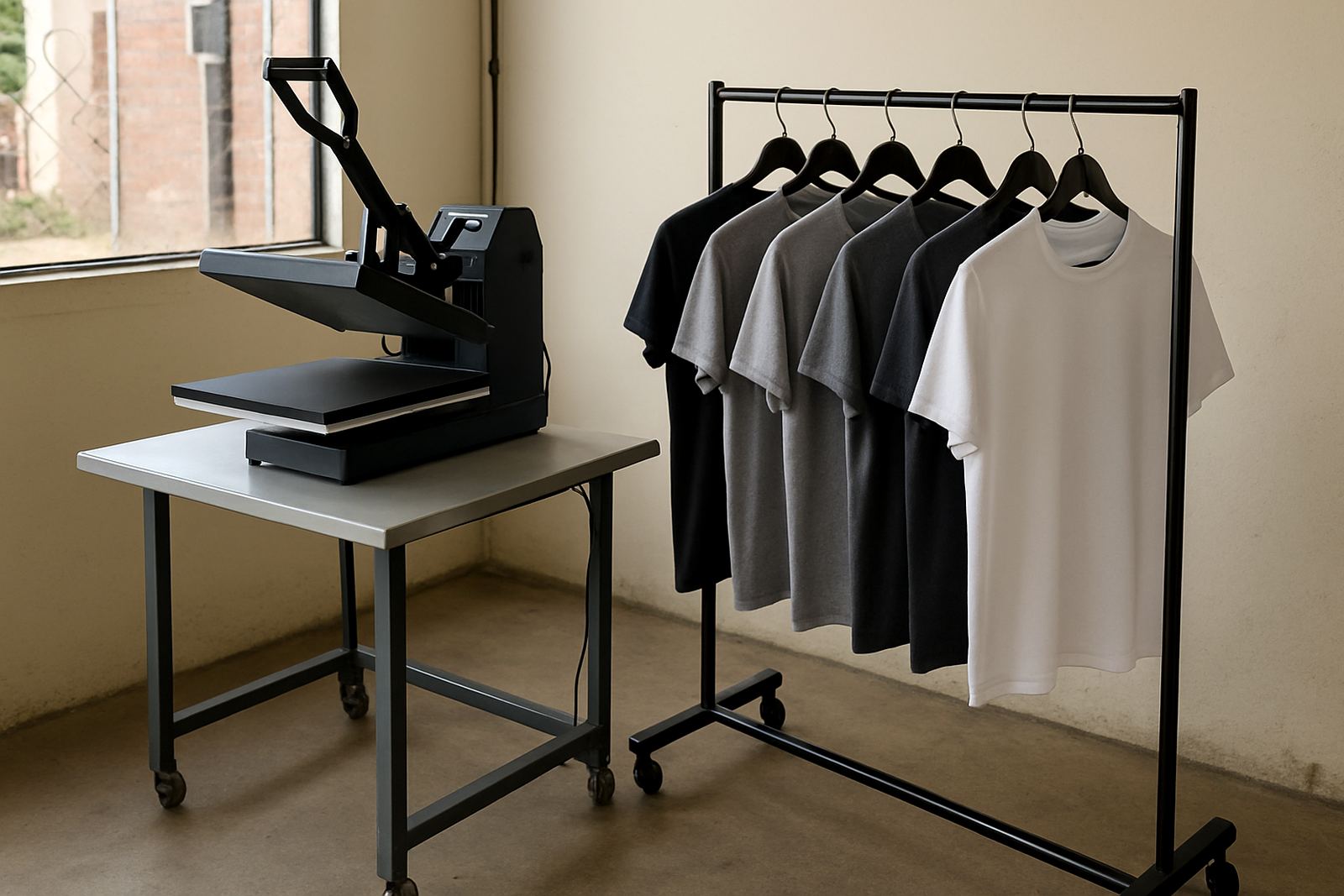
Pressure is the part that does the real bonding
When a transfer is applied, the heat opens the carrier layer and the pressure helps push the adhesive or ink layer into the fabric surface. That contact matters because cotton, polyester and blended garments all behave differently under heat. A press set too light may leave part of the image sitting on top of the fibres, while too much pressure can distort the garment, flatten texture, or cause unwanted shine on certain fabrics.
In practical terms, pressure controls how evenly the heat is transferred through the platen and how firmly the transfer sits against the garment. If you are doing short-run work for clubs, schools or promotional tees, consistency is more important than guesswork. One shirt that looks fine and the next that lifts at the edges is often a pressure problem first, not a temperature problem.
Too little pressure shows up fast on the finished print
Low pressure does not always fail immediately. The transfer may look acceptable when it comes off the press, then start giving trouble after the first wash. This is common on jobs where the operator is trying to protect delicate garments by keeping the pressure too light, especially on polyester sportswear and soft blends.
- Poor edge adhesion, especially on letters and fine detail
- Patchy finish where the centre bonds but the corners do not
- Early cracking or lifting after wash cycles
- Uneven gloss on the applied area
For garment decorators working in Midrand or Sandton, where customers expect same-week turnaround, reprints are expensive. One bad application can waste both the garment and the transfer media, so it pays to test pressure on each new material rather than assuming one setting suits everything.
Too much pressure can damage the garment and the artwork
High pressure is just as risky. On heat-sensitive fabrics it can flatten seams, leave platen marks, or distort the weave. With some transfer films and papers, excessive pressure forces adhesive out of the image area and leaves a messy halo. On textured or thick items like hoodies and workwear, too much force may also reduce even contact if the press cannot close properly across the full surface.
Operators sometimes increase pressure to compensate for a press that is not level or for garments with zips, collars or thick stitching. That can work in an emergency, but it is better to correct the setup. A clean press bed, proper cover sheet and the right pad thickness often solve the problem without over-tightening the machine.
Finding the right setting starts with the substrate
There is no single pressure setting that works for every transfer job. A small label on woven tape, a full colour garment transfer, and a thick winter fleece all need a different approach. The safest method is to build a simple pressure reference for the materials you use most often. That saves time and keeps your output consistent when orders come in across Johannesburg, Pretoria and the East Rand.
- Use a test piece before running a full batch
- Check the garment thickness and seam placement
- Match pressure to the transfer type, not just the fabric type
- Record settings for common items such as cotton tees, poly shirts and hoodies
If your shop handles both garment decoration and label printing, keep separate notes for each process. Small label media can need a firmer, more even contact than soft apparel work, while certain fabric transfers prefer controlled medium pressure. Saving those settings reduces operator error, especially when different staff members are running jobs on the same day.
Midrand conditions can affect how a press behaves
South African print shops know that the same setting can behave differently from one day to the next. In Midrand, dry winter air, summer humidity and load shedding all affect workflow. A press left idle after a power cut may need a fresh warm-up and a quick test because platen temperature recovery is not always instant. If the workshop is cold in the morning, pressure feel can also change slightly until the machine is properly stabilised.
Humidity matters too. Garments stored in a damp room or media kept in a less-than-ideal storeroom can absorb moisture, and that changes how the transfer sits under the press. Moisture can make the first press cycle look inconsistent, so many shops now pre-press items for a few seconds to remove trapped damp before applying the transfer. That small step often improves bond quality and reduces post-press issues.
A simple pressure check routine saves rework
Before running a serious batch, use a repeatable check. It does not need fancy kit. The goal is to know whether the press is closing evenly and whether the pressure suits the job in front of you. If a machine has been moved, serviced or used heavily, check it again rather than trusting yesterday’s setting.
- Close the press on a test garment or sample carrier
- Confirm even contact across the full platen
- Look for uneven marks, corner lift or centre over-pressing
- Review the first finished item under normal handling light
If the result changes from one side of the platen to the other, the issue may be alignment or pad wear, not operator technique. Preventive maintenance, a level base and regular inspection of the pressure mechanism can stop repeat problems before they affect a full production run.
Pressure is part of the whole application process
The best results come when time, temperature and pressure are treated as one set of decisions. If any one of them is off, the job can still fail. That is why experienced shops train operators to think beyond the clock on the press. A solid application should feel consistent, look even and survive the first wash without complaint.
For shops serving clients across South Africa and neighbouring countries, pressure control is a practical way to protect margins. It reduces wasted stock, improves wash performance and helps every operator deliver the same finish, whether the job is a small school order in Pretoria or a short-run promotional batch heading north from Johannesburg. In this trade, pressure is not a small detail, it is part of the quality standard.