Why pretreatment is the make-or-break step
In direct garment printing, pretreatment is not an optional extra. It prepares the fabric so the ink sits where it should, instead of spreading into the fibres and losing strength. On white garments you may get away with a lighter hand, but on black, navy and red T-shirts the difference is obvious straight away.
The point is simple: the printer can only do so much if the fabric is not prepared properly. A shirt that is over treated can leave residue marks, stiff patches and patchy colour. Under treated garments can look dull, wash out early, or show fine detail poorly around small text and logos. Consistency matters because customers notice when one shirt in a batch looks different from the others.
For print shops handling 10 to 200 pieces at a time, pretreatment also affects time and costing. If every garment needs a second pass, or a reprint after washing tests fail, your labour goes up fast. That is why good operators treat pretreatment as a controlled process, not a quick spray-and-hope job.
What pretreatment actually does to the fabric
Pretreatment works by changing how the textile surface accepts and holds ink. It helps the white underbase sit on dark fabric and gives colour inks a better foundation. It also improves wash resistance once the garment has been heat pressed and cured properly.
Different fabrics react differently. Cotton is usually the easiest to handle. Cotton rich blends can still print well, but the mix changes how much liquid the cloth takes in. Polyester, polycotton and performance wear need more care because heat and moisture can affect the result. In coastal towns like Durban or Port Elizabeth, stored garments may also absorb humidity, so the same settings that worked on Monday can behave differently on Friday if the stockroom is damp.
- Better ink anchoring on dark garments
- Cleaner edges around fine detail
- Improved wash durability after curing
- More even colour across the full print area
Getting even coverage from spray to press
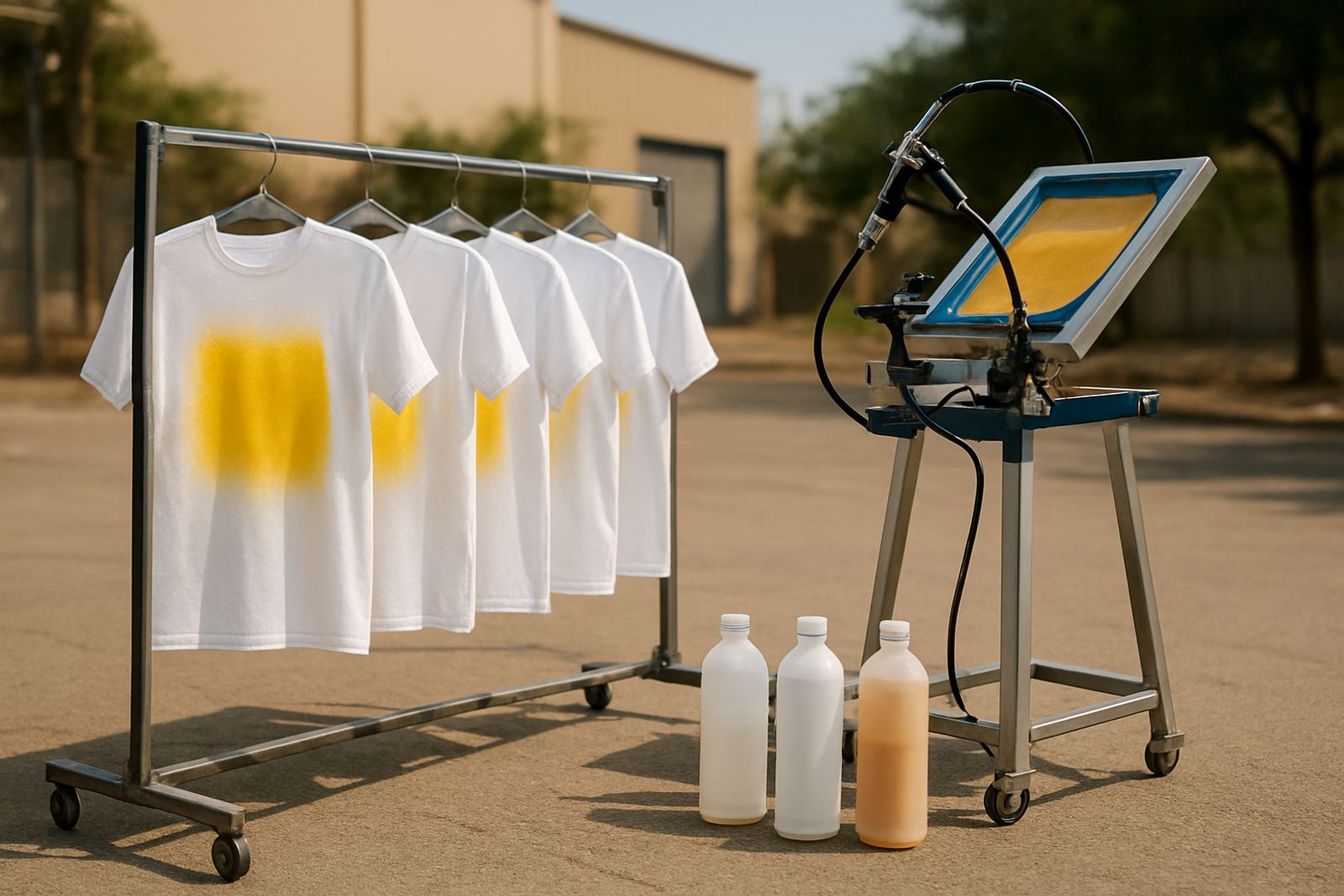
Even coverage is where many shops lose money. A garment needs the right amount of liquid in the right area, with no heavy pools at the seams, shoulders or underarms. Spraying too far away can leave dry spots. Spraying too close can make the centre too wet while the edges stay light. The result is a print that looks fine on the platen but fails on the customer floor.
Most operators use either manual spray, semi automatic application or a pretreatment machine depending on volume. Whatever the method, the goal is the same: repeatable coverage. A good test is to hold treated shirts under light before printing. If you see streaking, missed corners or shiny wet patches, the load is not ready.
- Keep nozzle distance consistent from garment to garment
- Check spray pattern weekly for blockages or drift
- Maintain the same garment placement on the platen
- Allow the correct dry or cure time before printing
When shops rush this stage, they usually pay for it later in returns. A small front logo might survive poor prep, but a large chest print or fine art on a dark hoodie will show every inconsistency.
Heat, humidity and local shop conditions
South African print rooms do not all run in perfect conditions. In Midrand you may have dry winter air, dust from nearby traffic and power interruptions that change your workflow halfway through a shift. In summer, humidity can affect how garments dry and how pretreatment settles into the fabric. If your curing method is not steady, the whole process becomes harder to repeat.
Load-shedding creates its own problems. If a pretreatment unit, heat press or drying tunnel is switched off and on through the day, operators often change habits to keep production moving. That is when mistakes creep in. Some garments get extra heat, some get less, and some are printed before they are fully ready. The cure is planning: keep a simple log of spray settings, press time and temperature, then check those figures whenever the room conditions change.
For shops supplying schools, events and retail clients, this kind of discipline protects margins. A reprint costs more than a few extra seconds of checking. It also affects turnaround when clients want 50 shirts for a Friday handover and you only discover the fault on Thursday afternoon.
Matching pretreatment to fabric, colour and artwork
Not every job needs the same pretreatment approach. A light pastel T-shirt for a staff event is handled differently from a heavy black hoodie with a detailed full colour logo. Likewise, a label print on a structured garment can need a tighter process than a soft fashion cotton tee. The type of artwork matters too. Small lettering, fine lines and gradients show weakness very quickly.
Practical shops build simple job rules and stick to them. They note the garment type, colour, fabric mix and print size before they start. They also check whether the artwork contains whites, pale skin tones or deep shadow areas, because these are the areas that show banding or fading first. If you are printing for export or for neighbouring countries where the garment may travel, you need extra confidence in wash fastness and colour repeatability.
- Test new garment batches before full production
- Adjust settings for black, navy and red garments
- Keep samples of approved jobs for comparison
- Record curing settings for repeat orders
How consistency lowers waste and rework
Consistency is not just a technical goal, it is a cost control tool. When pretreatment is predictable, your print heads stay cleaner, your rejects drop and your finishing team spends less time fixing avoidable faults. You also reduce wasted ink, wasted labour and wasted garments, which matters when cotton prices and shipping costs keep moving.
One Johannesburg shop we worked with was getting mixed results on 80 black cotton T-shirts for a local contractor near Midrand. Some shirts came out strong, others looked grey and washed unevenly. The problem was not the printer. It was inconsistent pretreatment coverage and uneven pressing after power cuts interrupted the workflow. Once the team standardised the process and checked every batch before printing, the rework dropped sharply.
That kind of improvement shows why pretreatment deserves attention from the start. A steady process gives you better colour, fewer complaints and more confidence when quoting short-run work. It also makes training easier because new operators can follow the same steps instead of guessing.
Practical checks before you start a run
Before printing, every shop should do a quick pretreatment check. It does not need to be complicated, but it should be done every time. A few minutes now can save a full batch later.
- Confirm the garment type and colour against the job card
- Check spray or application settings before the first piece
- Inspect for missed areas, pooling or heavy edges
- Make sure the garment is fully ready before it goes to print
- Keep the heat press or dryer at the set temperature through the run
When these checks become routine, pretreatment stops being a problem area and starts doing its job quietly in the background. That is where it should be. Not noticed because everything went wrong, but noticed because the prints look right first time and stay that way after washing.