When T-shirt Orders Are Small But Colour Counts
If you are printing 10 to 50 shirts at a time, or even a few hundred across different sizes and colours, the biggest pressure is not just print quality. It is keeping unit cost under control while still getting good colour, repeatable results, and fast handover. That is where short-run systems make sense, especially for promo work, school events, staff shirts, club wear, and retail samples.
In Midrand, Sandton, Pretoria and the East Rand, many shops run mixed jobs through the same space. One day it is cotton tees for a launch, the next it is a batch of branded workwear, then a rush order for a varsity event. We help businesses select equipment that can switch quickly between jobs without wasting media or tying up labour. Load-shedding also matters here. If a unit must restart cleanly after power interruptions, that can save a lot of wastage and stress.
Transfer Printing Versus Direct Garment Printing
There is no single answer for T-shirt printing. Transfer methods suit many shops because they are easier to manage for mixed fabrics, dark garments, and variable order sizes. Direct garment printing works well for soft-hand cotton jobs and artwork that needs smooth gradients and detailed colour. The right choice depends on your garments, your staff skill level, and how many pieces you need to finish per shift.
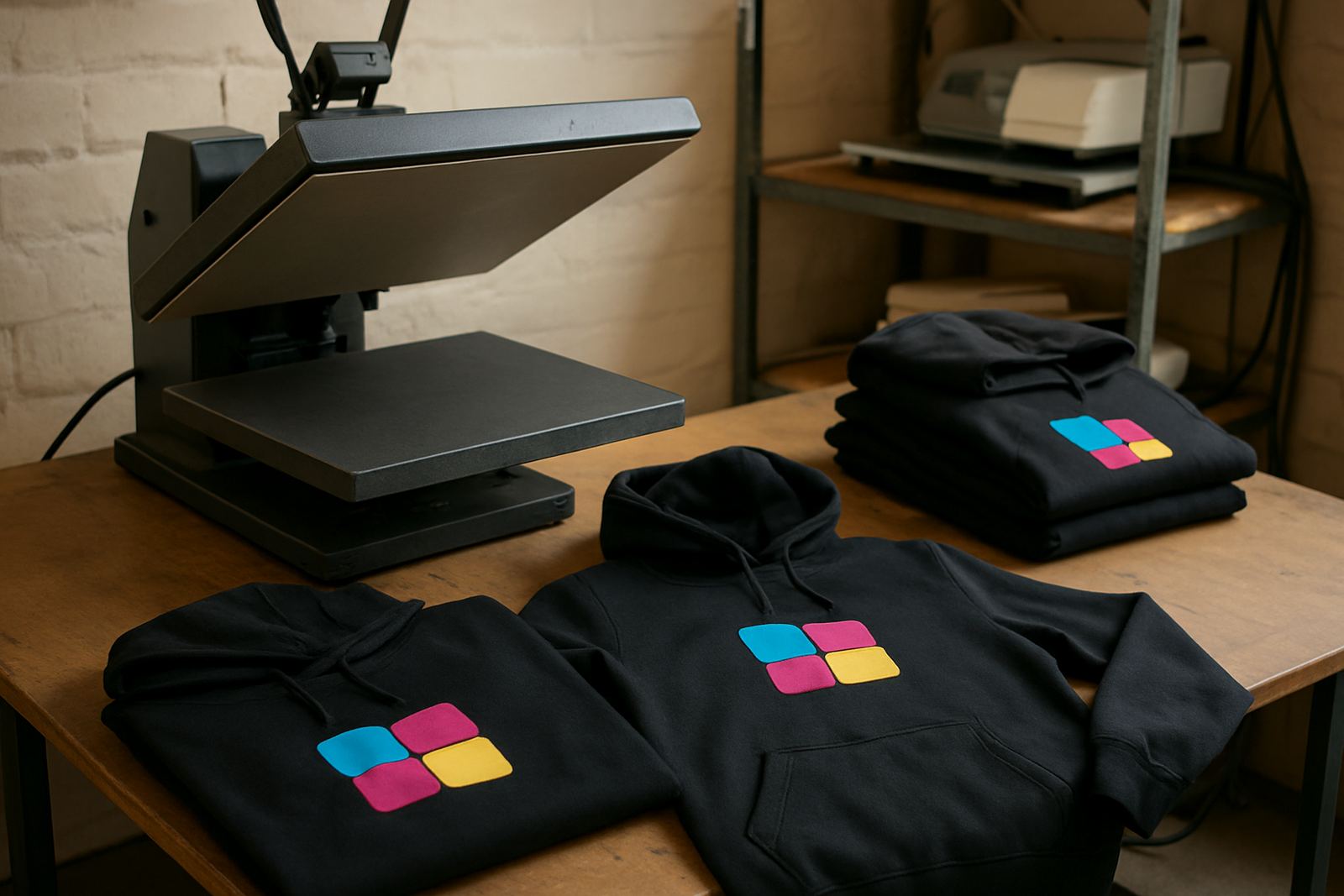
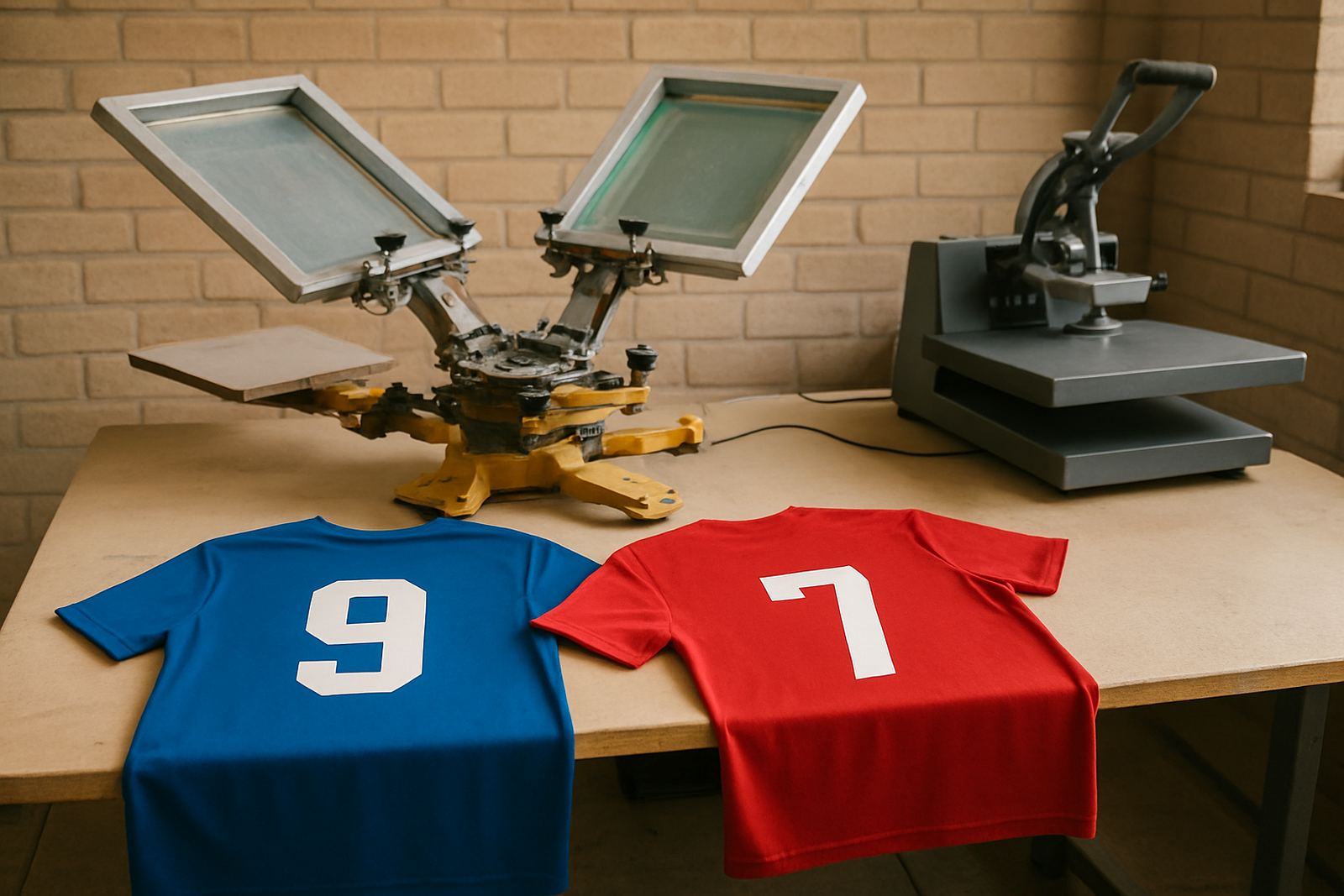
For transfer production, a typical set-up may include a specialised digital printer, transfer media, curing or fusing equipment, powder or adhesive handling where needed, and a heat press. For direct garment work, shops usually need a textile printer, pre-treatment workflow, drying or curing support, and close control of printhead care and media profiling. If you are also doing labels or neck tags, it helps to plan a separate line so shirt work does not slow down your label orders.
- Transfer printing is often better for dark garments and mixed fabrics.
- Direct garment printing is useful for soft hand feel and detailed art.
- Both methods need stable colour management and regular maintenance.
- Short-run work benefits from quick job changeovers and simple operator routines.
A Practical Shop Layout For Faster Shirt Turnaround
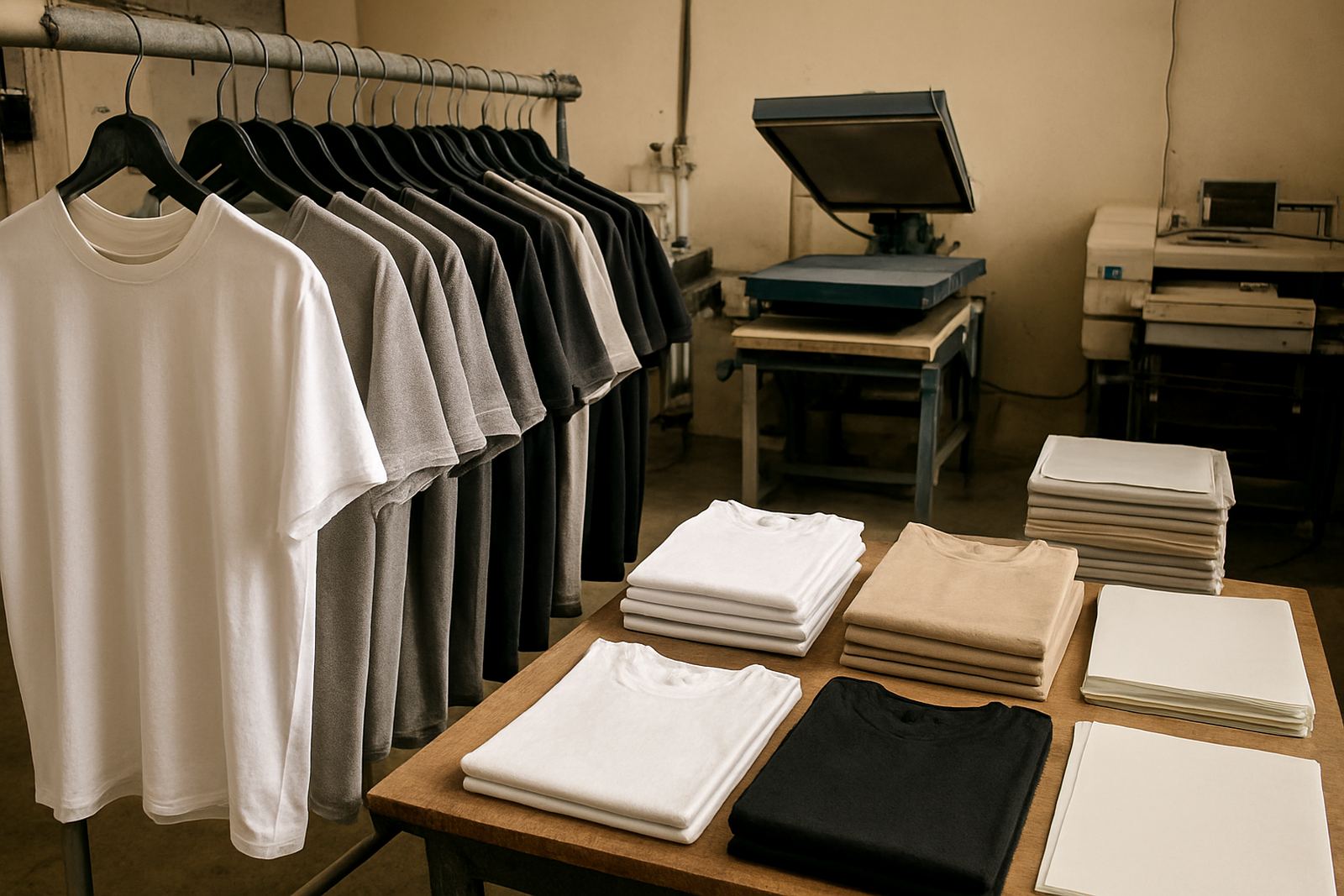
A T-shirt printing area does not need to be large, but it must be organised. Keep receiving, printing, heat pressing, cooling, folding and packing in a logical line so shirts are not carried back and forth. In a small Midrand workshop, a compact bench, proper ventilation, a heat-safe finishing zone and shelf space for blanks can make a big difference to output. Coastal humidity is less of a problem inland, but many of our customers ship to Durban, Gqeberha and Cape Town, so media storage still needs to stay dry and flat.
We usually advise shops to think in terms of daily flow, not just machine footprint. Leave enough room for media reels, cleaning supplies, rejected prints, and finished stock. If staff are sharing the space with embroidery, signage, or label work, the printer should be placed where dust, heat and foot traffic are controlled. A tight layout may save square metres, but it can slow down every job and cause avoidable mistakes.
- Store blanks off the floor and away from sunlight.
- Keep heat press tables clear of ink, powder and lint.
- Allow for easy access to maintenance panels and consumables.
- Separate clean stock from finished garments ready for dispatch.
Common Mistakes That Cost Time And Money
Many first-time shirt printing setups fail because the equipment is bought before the workflow is planned. A printer alone does not make a production line. You also need the right media, the right curing method, and staff who know how to handle each garment type. Another common issue is underestimating power backup. If your site cannot handle a few outages a week, you need to plan for clean shut-downs and restart checks, otherwise prints can be lost mid job.
Colour drift is another problem. If artwork is being reprinted for sports clubs or repeat orders, the output must stay consistent. That means regular calibration, profiling, nozzle checks and honest maintenance schedules. A small typo in job notes can also become an expensive mistake when sizes and print positions are mixed up. We have seen shops waste a lot of stock because the front and back placement was not confirmed before production started.
Budget Ranges For New And Growing Print Shops
Budgets for T-shirt printing vary a lot, but it helps to think in tiers. A basic entry-level setup for simple short-run transfer work can start from around R180,000 to R350,000 depending on the printer size, heat press quality, and supporting equipment. A more capable production setup with stronger output, better colour control, and a smoother workflow can move into the R450,000 to R900,000 range. Shops adding direct garment capability, extra curing support, and more advanced handling should budget accordingly.
Consumables also need to be planned from day one. A shop that wins good local work in Johannesburg or exports into Botswana, Namibia or Zambia must think about toners, media, cleaning items, test stock and spares. Do not only ask what the machine costs. Ask what a finished A3 shirt graphic costs, how much waste you expect per week, and how long it will take to recover the investment at your real sales price. That is where better decisions are made.
Support That Helps Shops Keep Printing
CMYK Industries works with print shops across Midrand, Sandton, Pretoria, the East Rand, the West Rand and wider Southern Africa supply routes. Our team supports machine installation, operator training, preventive maintenance, breakdown repairs, colour calibration, media profiling, printhead care, remote support, consumable planning and workflow advice. For T-shirt printing, that practical support matters because the business depends on uptime, not just machine specs.
If you are setting up a new shirt line or replacing ageing equipment, we can help you compare the machine set, the garment mix, and the order volumes before you commit. The best result is a shop that can handle short-run colour work without constant stoppages or rushed rework. That keeps clients coming back and helps your team work with confidence.