What A Conveyor Curing Oven Does In Daily Production
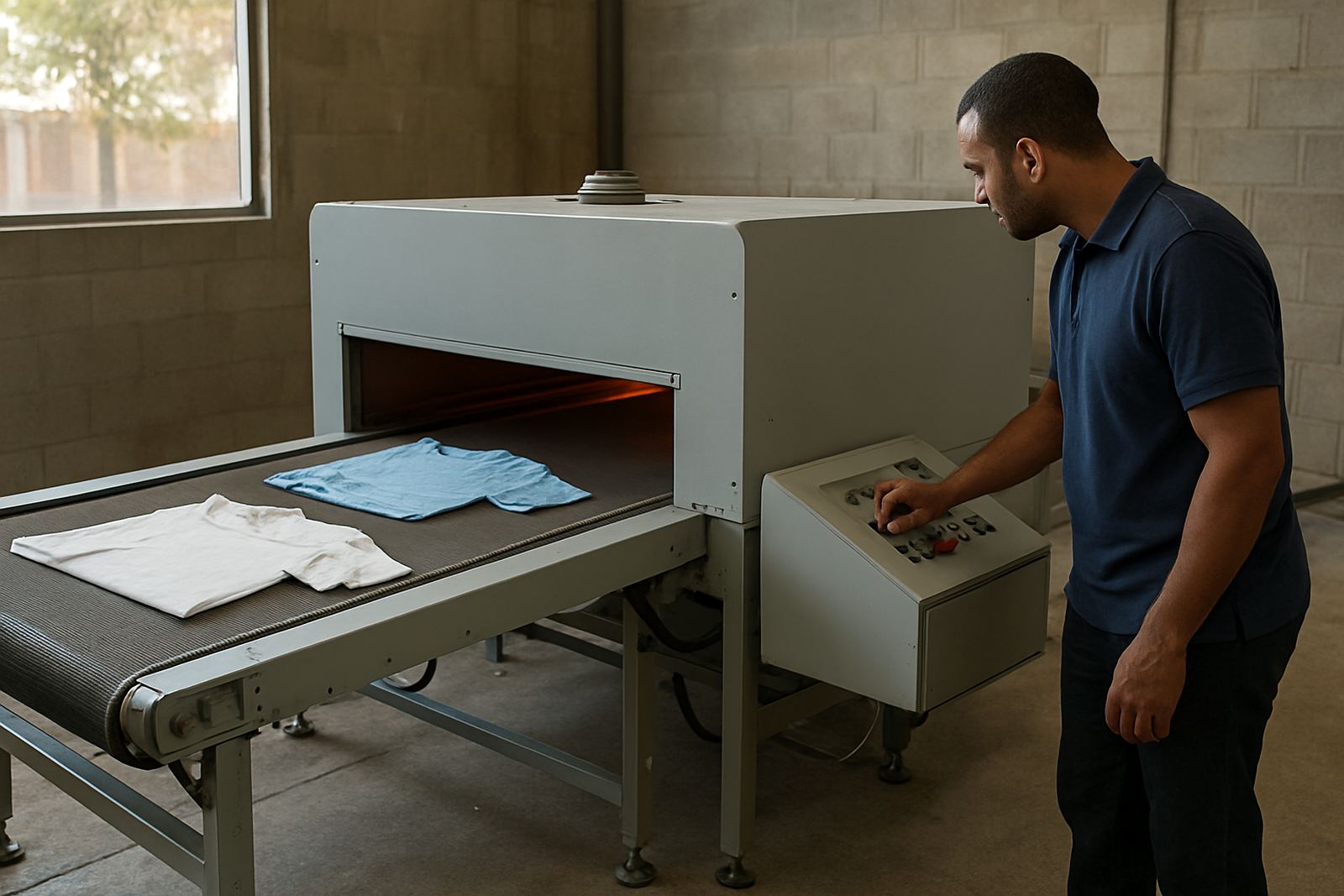
A conveyor curing oven moves garments or printed substrates through a heated chamber at a controlled speed, so each item gets the same dwell time and heat exposure. That matters when you are curing transfer films, water-based inks, adhesives or finishing work where inconsistent heat can cause under-curing, scorching or dull colour.
In a busy shop, this kind of unit takes the pressure off manual pressing. You load one side, the belt carries the item through, and you take it off at the exit point ready for cooling, stacking or further finishing. For short-run colour work and mixed jobs, the repeatability is often the main gain.
- Continuous throughput for higher volumes
- Even heat across repeated jobs
- Less operator strain than batch pressing
- Useful for transfer, garment finishing and some label applications
Sizes, Belt Options And Production Fit
Conveyor curing ovens are usually selected by belt width, tunnel length and heater output. Smaller units suit compact print rooms and sample work, while wider belts and longer tunnels help when you are running larger garments, multiple small items or wider transfer pieces. A typical setup for garment shops may use a belt width from 450 mm up to 900 mm, with tunnel lengths from about 900 mm to 2 400 mm depending on output needs.
Speed control is important because cure time changes with product type and ink system. A belt that runs too fast can leave adhesive weak, while a belt that runs too slow can overbake the print. For shops doing mixed production, variable speed control gives more flexibility and helps when you switch between cotton tees, sportswear panels and labels. If you run in Midrand, Sandton or Pretoria, the right size also depends on floor space and how much heat your room can handle in summer.
- Entry-level units for short-run and sample production
- Mid-size tunnels for growing garment shops
- Wider, longer ovens for higher daily throughput
- Variable belt speed for different media and cure times
Where It Suits Best In South African Print Shops
This equipment suits shops that are already producing at volume, or planning to move from manual pressing to a more controlled curing process. It is often used in garment decoration, DTF finishing, transfer work, label production and some general textile finishing where heat consistency matters. Shops handling school wear, promotional apparel, workwear and event stock can see the biggest benefit because batch sizes tend to be repeated and time sensitive.
It also helps where labour is tight. If one operator is juggling artwork, pressing and packing, a conveyor oven can remove a bottleneck. In hotter coastal towns, humidity can slow handling and cooling, while in winter inland static and dry air can affect media handling. A stable curing process reduces those variables and gives more predictable output from job to job.
- Garment decorators working with repeat orders
- Print shops needing better cure consistency
- Sites with limited operator time per job
- Businesses expanding into neighbouring countries and regional supply
Installation, Power And Site Requirements
Before installation, check your floor space, access for delivery and the electrical load available on site. Conveyor ovens can require a dedicated single-phase or three-phase supply depending on model size and heater rating. Many larger units are best on three-phase power, especially if the aim is steady all-day use. If your building has load-shedding backup, confirm whether the inverter, generator or changeover setup can carry the starting load and the running draw without tripping.
Allow clearance around the machine for airflow, operator movement and safe loading. Heat builds quickly in enclosed rooms, so extraction and ventilation matter. If the unit uses gas for heating on a specific model, you also need safe cylinder storage or a compliant gas line, plus proper shut-off points. In some municipal areas, fire compliance checks may apply where gas and high heat equipment are installed, so it is worth confirming local requirements before delivery.
- Check single-phase or three-phase supply in advance
- Allow room for loading, cooling and maintenance access
- Plan ventilation for heat build-up in enclosed spaces
- Confirm backup power capacity if you face regular outages
Care, Servicing And Keeping Cure Quality Stable
Like any production machine, a conveyor curing oven needs routine care if you want the same finish every day. Keep the belt clean, check for build-up around the heating chamber and make sure the conveyor runs straight. If the belt starts tracking off-centre, you can get uneven cure times or edge damage. Thermal controls should also be checked often because a sensor drift can change the actual curing temperature even when the display looks normal.
Preventive maintenance normally includes belt tension checks, fan inspection, heater testing and a general safety review of switches and wiring. In humid areas, keep an eye on corrosion and storage conditions. In dusty factory spaces, filtered cleaning and regular wipe-downs help to protect moving parts. If you are running long shifts, a simple daily start-up check and end-of-day clean can prevent stoppages that turn into costly breakdowns.
- Clean belt and chamber regularly
- Check tracking, tension and fan performance
- Test temperature control and safety switches
- Schedule servicing before peak season or large jobs
What To Check Before You Place An Order
When ordering a conveyor curing oven, start with the products you cure most often. The belt width should match your largest common item, not only the rare oversized one. You should also confirm the target temperature range, the conveyor speed range and whether the heater output is suitable for your planned throughput. If you work with thicker transfers or multiple layers, you may need a unit that holds heat better than a lighter shop model.
Ask what consumables or spare parts are recommended, and whether the machine needs special tools for belt adjustment or cleaning. Also check the arrival point on your premises, because a larger oven may need a clear route through a roller shutter or narrow passage. If you are supplying to Durban, Gqeberha or further into Southern Africa, consider transport height, packing and power compatibility at the destination.
- Largest item size you plan to cure regularly
- Required temperature and conveyor speed range
- Power supply, backup power and ventilation needs
- Delivery access, packing and on-site space
Key facts
| Machine type | Continuous conveyor curing oven for transfer and garment finishing |
|---|---|
| Belt width options | Typically 450 mm to 900 mm, depending on model |
| Tunnel length options | Typically 900 mm to 2 400 mm, depending on output requirement |
| Temperature range | Commonly set for low to medium heat curing applications |
| Power requirement | Single-phase or three-phase options, model dependent |
| Control features | Variable belt speed, heat control, safety shut-offs and tracking adjustment |