Compact curing for small print rooms
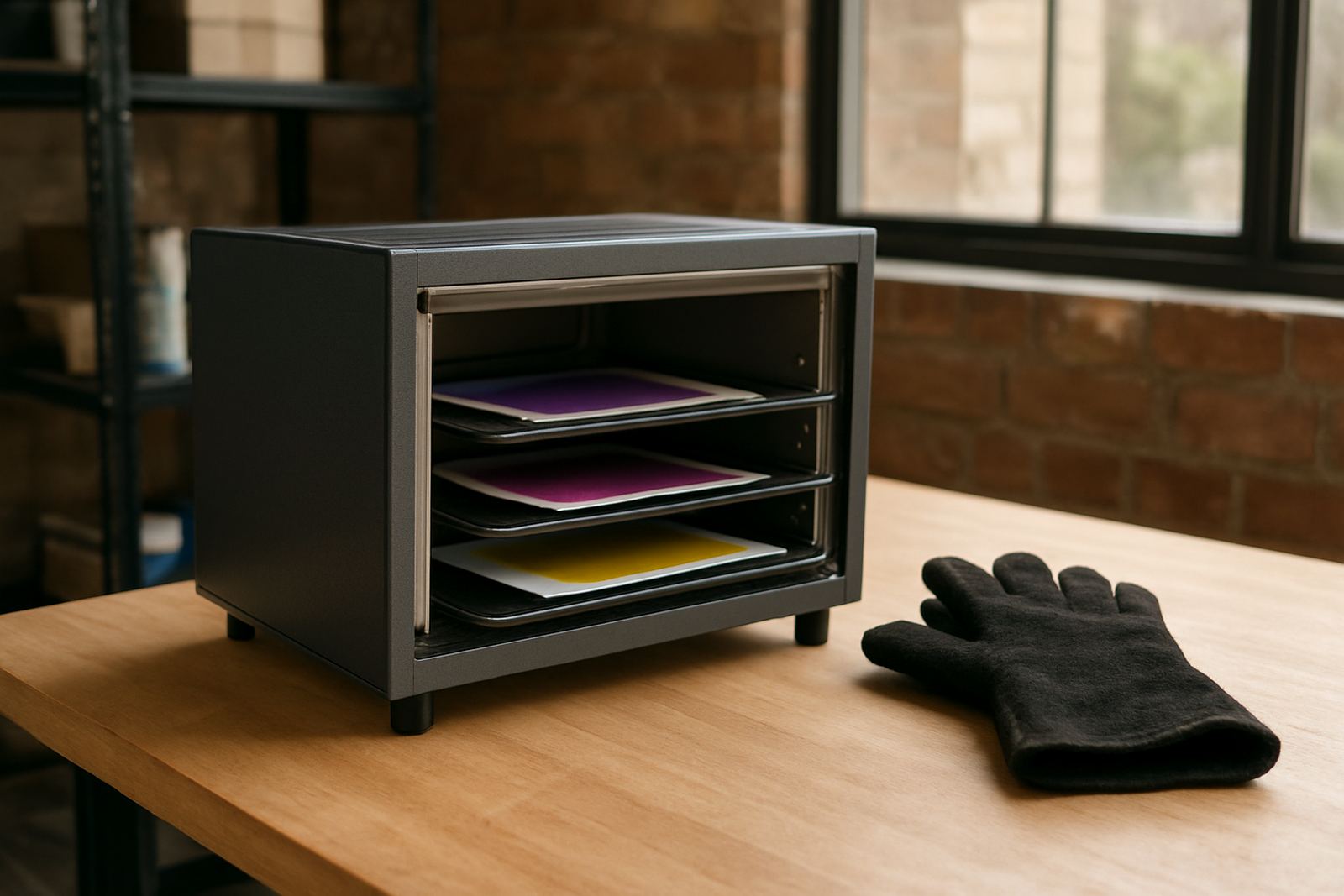
A compact curing oven is a heated cabinet used to cure transfer films, set prints on garments, and finish small batches where an oversized tunnel or conveyor is not practical. It gives more even heat than a hand held heat source and keeps printed items contained in one space, which helps when you are working in a tight room, a back office production area, or a small workshop in Midrand, Sandton, Pretoria or the East Rand. For many garment decorators, it is the step up from trial work to repeatable short-run output.
These ovens are chosen for control more than speed. You can load a few shirts, hoodies, tote bags or transfer sheets at a time and keep the process consistent. That matters when you are printing names, small team orders, promotional runs, or label and transfer work that must cure evenly without scorching edges. In humid coastal areas, a covered curing chamber also helps keep media drier before it goes out to press or heat application.
- Useful for DTF-style transfer films, printed garments, and small label finishing tasks
- Better heat control than improvised curing on racks or tables
- Fits shops that run short batches and need predictable output
Sizes, loading style, and output options
Compact curing ovens are available in a few practical sizes. Smaller units suit entry-level and side-line production, while wider cabinets are better when you need to cure several garments or larger transfer sheets in one cycle. Most models use a front or side loading chamber with shelves, trays, or hanging space depending on the application. If you are running mixed work, check whether the chamber suits flat media, finished garments, or both.
Typical options include adjustable temperature control, timer settings, internal circulation, and viewing or access features that make it easier to monitor a cycle without losing heat. Some users prefer a single shelf model for transfer films and labels, while others want multi-shelf capacity for garments. The right choice depends on your daily volume and how often you change jobs during the day.
- Small chamber options for limited floor space
- Single or multi-shelf loading, depending on batch size
- Temperature and time controls for repeatable curing cycles
- Air circulation options for more even heat distribution
Where this oven fits in your workflow
This type of oven suits print shops that handle short-run colour work and need a dependable finishing step without taking over the production floor. It is commonly used where garment decoration, transfer application, and label work happen in the same room. If you are producing jobs for schools, clubs, hospitality, events, or retail sample runs, a compact unit keeps the process moving without requiring a full industrial line.
It also works well for businesses that want a cleaner handover between printing and finishing. In busy Gauteng workshops, space is often shared with cutters, presses, packing tables and consumable storage, so a compact oven needs to do its job without demanding special building changes. For teams handling export or cross-border orders, that same controlled curing space helps keep output more consistent from batch to batch.
- Small to medium print shops
- Garment decorators doing short runs and sample work
- Label and transfer producers who need controlled heat
- Busy workshops with limited space and mixed equipment
Installation, power, and site checks
Before installation, check the available floor space, ceiling clearance, power supply, and ventilation. Most compact curing ovens are electric, so you need a stable supply that matches the machine rating and can handle the start-up load. In areas affected by load-shedding, many shops plan this equipment around backup power or schedule curing during available supply windows. If the unit uses gas-assisted heating, you will also need safe cylinder placement, correct regulators, and proper air movement in line with local safety rules.
It is worth measuring the door opening and the final position before delivery. A unit that fits on paper may still be difficult to move through a narrow corridor or up a tight ramp. You should also allow space for the operator to load and unload garments without standing too close to the hot chamber. In humid or dusty areas, keep the unit off bare floors where possible and away from water spray, wash-up sinks, or direct sun.
- Confirm power rating, socket type, and breaker capacity
- Allow for ventilation and safe working clearance around the oven
- Check access routes, door widths, and final placement before delivery
- Plan for backup power where outages are common
Keeping the oven accurate and reliable
Like any heat-based production machine, a compact curing oven needs routine care if you want even results. Wipe down the chamber regularly, remove lint and dust, and inspect seals, trays, hinges, and control settings. If your shop runs day in and day out, schedule preventive maintenance so the heating elements, fans, wiring, and temperature readings are checked before a fault interrupts production. A small drift in heat can mean under-cured garments or faded transfer performance, so regular checks are worth it.
We also recommend keeping a simple operating log for common jobs. Record the temperature, time, loading pattern, and material type for repeat runs. That helps your team spot changes early, especially when different operators are on shift. If you notice uneven curing, smell of overheating, or longer warm-up times, stop and inspect the machine instead of pushing another batch through.
- Clean lint and residue after regular use
- Check temperature consistency and fan performance
- Inspect seals, cables, and controls during maintenance
- Keep simple job notes for repeat production settings
What to confirm before you order
When ordering a compact curing oven, confirm the application first. A unit that works well for transfer films may not suit bulky garments, and a cabinet sized for tote bags may be too small for your longer labels or larger sheets. Ask for the internal chamber dimensions, temperature range, warm-up time, and power requirements so you can match the machine to your actual jobs. If you work with mixed media, make sure the loading method suits your process and not just the product photos.
It also helps to plan consumables and support at the same time. If your team needs installation, operator training, colour calibration on connected equipment, or breakdown backup, line that up before the machine lands. For shops in Johannesburg, Pretoria, the East Rand or further afield into neighbouring countries, clear planning reduces downtime and avoids a lot of back and forth later. A good order starts with the right chamber size and ends with proper support, not just the lowest price.
- Confirm chamber size, tray layout, and max item dimensions
- Ask for power or gas requirements in writing
- Check whether installation and training are included
- Match the oven to your daily batch size and available space
Key facts
| Product type | Compact curing oven for transfer films and printed garments |
|---|---|
| Typical use | Short-run curing, small batch finishing, garment decoration |
| Chamber style | Single or multi-shelf compact cabinet |
| Temperature control | Adjustable heat control with timer settings |
| Power needs | Electric supply matched to machine rating, backup power recommended where needed |
| Support | Installation, operator training, preventive maintenance, breakdown repairs, remote support |